Light Without Borders: Stained Glass for the Cathedral of Saint Mother Teresa in Pristina, Kosovo
Stained Glass · Sacred Art- Story
- Commissions
- By
- Stevan Stanišić | Studio Stanišić
Mila Apperlo | Apperlo Art - Year
- 2015
- Reading
- 8 min
Some commissions are sealed with a contract. This one was sealed with a handshake at the top of a bell tower, high above Pristina.
The cathedral of Kosovo
The Cathedral of Saint Mother Teresa in Pristina is the most important Catholic church in Kosovo and one of the tallest buildings in the capital. Its foundation stone was laid in 2005 by President Ibrahim Rugova, construction began in 2007, and the unfinished church was first opened on 5 September 2010, the anniversary of Mother Teresa's death. It was consecrated on 5 September 2017, the first anniversary of her canonization.
When we came to Pristina, the great white nave was still waiting for its windows: tall round arched openings down both sides, and 2 more in the sanctuary behind the altar.
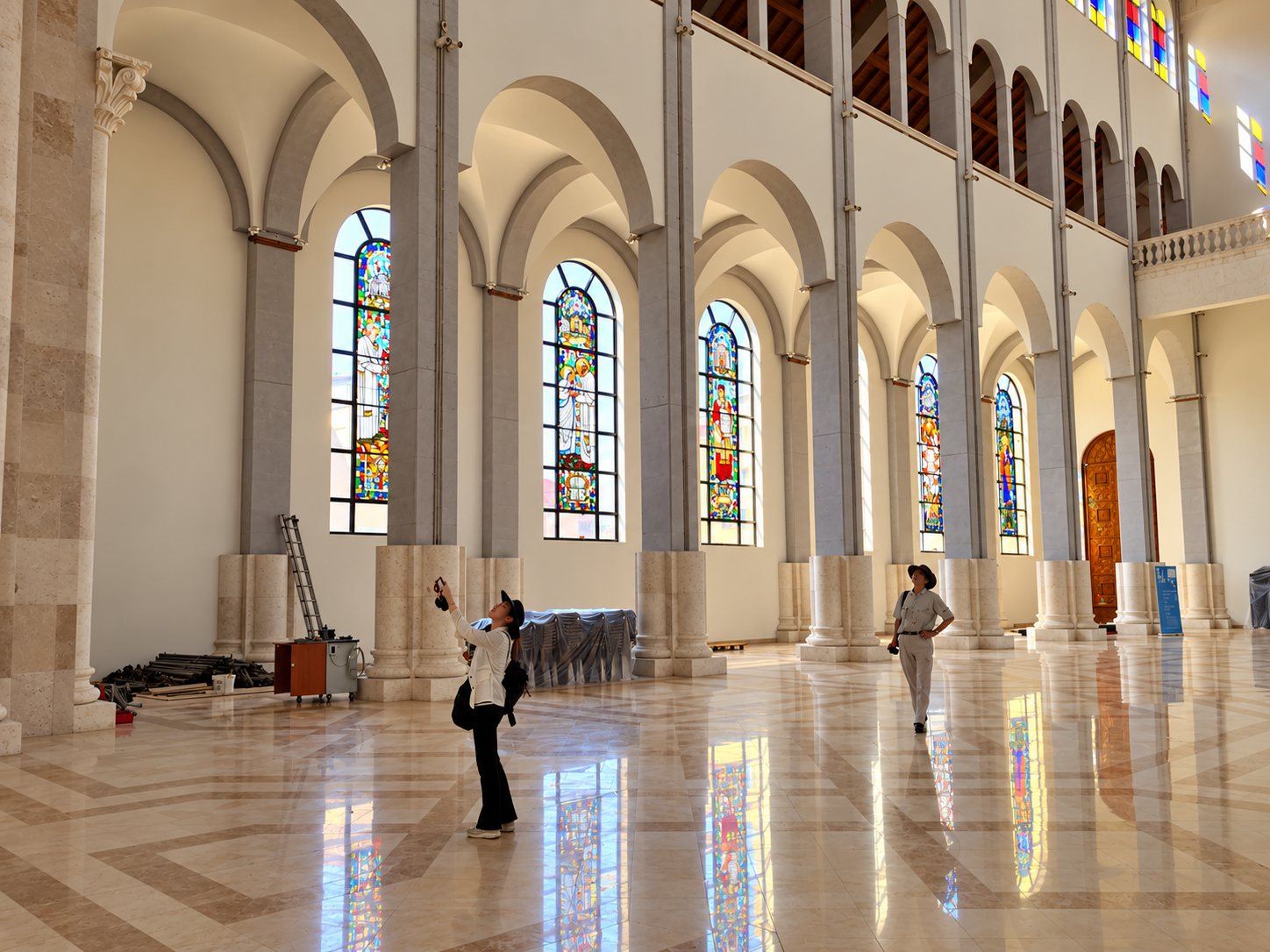 The nave in the morning light
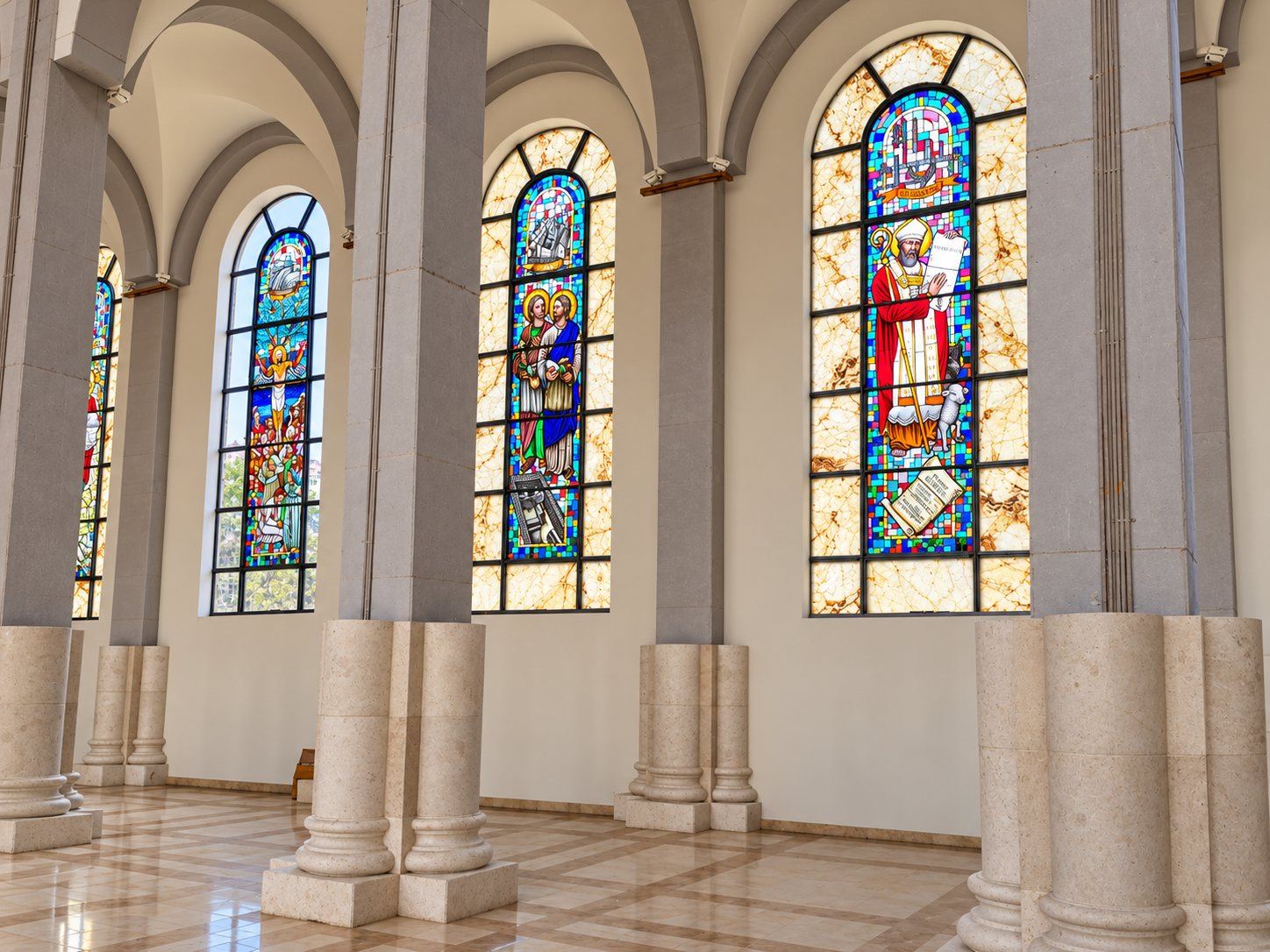 Along the aisle
A story told in glass
The story of the windows belongs to don Dominik Qerimi. In our contract the bishop named him as the person in charge of the artistic side of the cathedral, and he became the author of the storyline and the art director of the whole series: which saints, which moments of history, which words would be written in the glass. Every window was designed with him, and he guided its quality from the first sketch to the last piece of glass.
Our work together began in Gnjilane. From 27 to 29 March 2014 our artists sat with don Dominik at a working meeting there, and under his direction they drew the first 6 sketches and agreed the concept for the other 12. It was the first of many trips to Gnjilane, back and forth with drawings, colors and ideas, until every window was right.
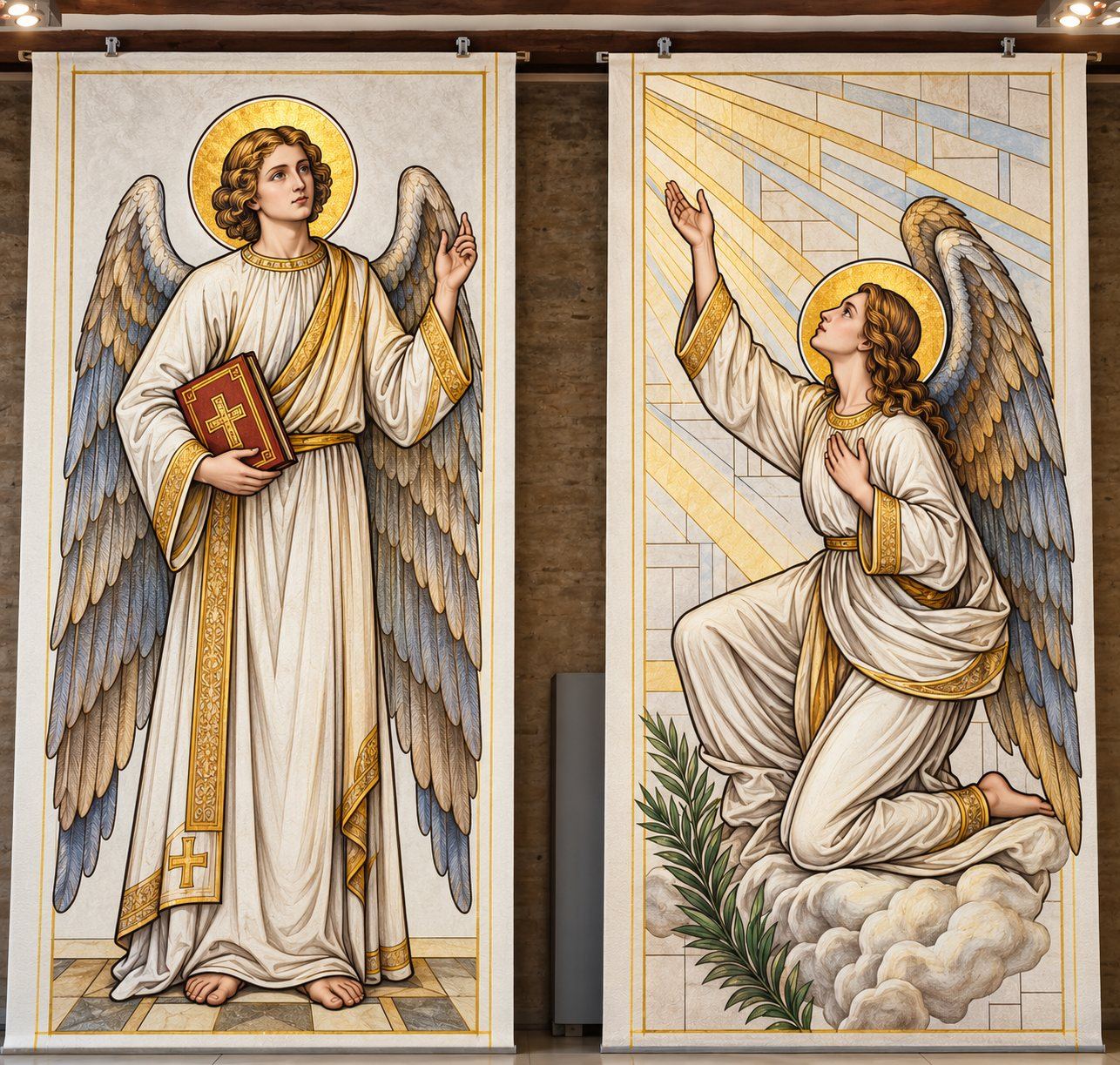 The altar angels on paper
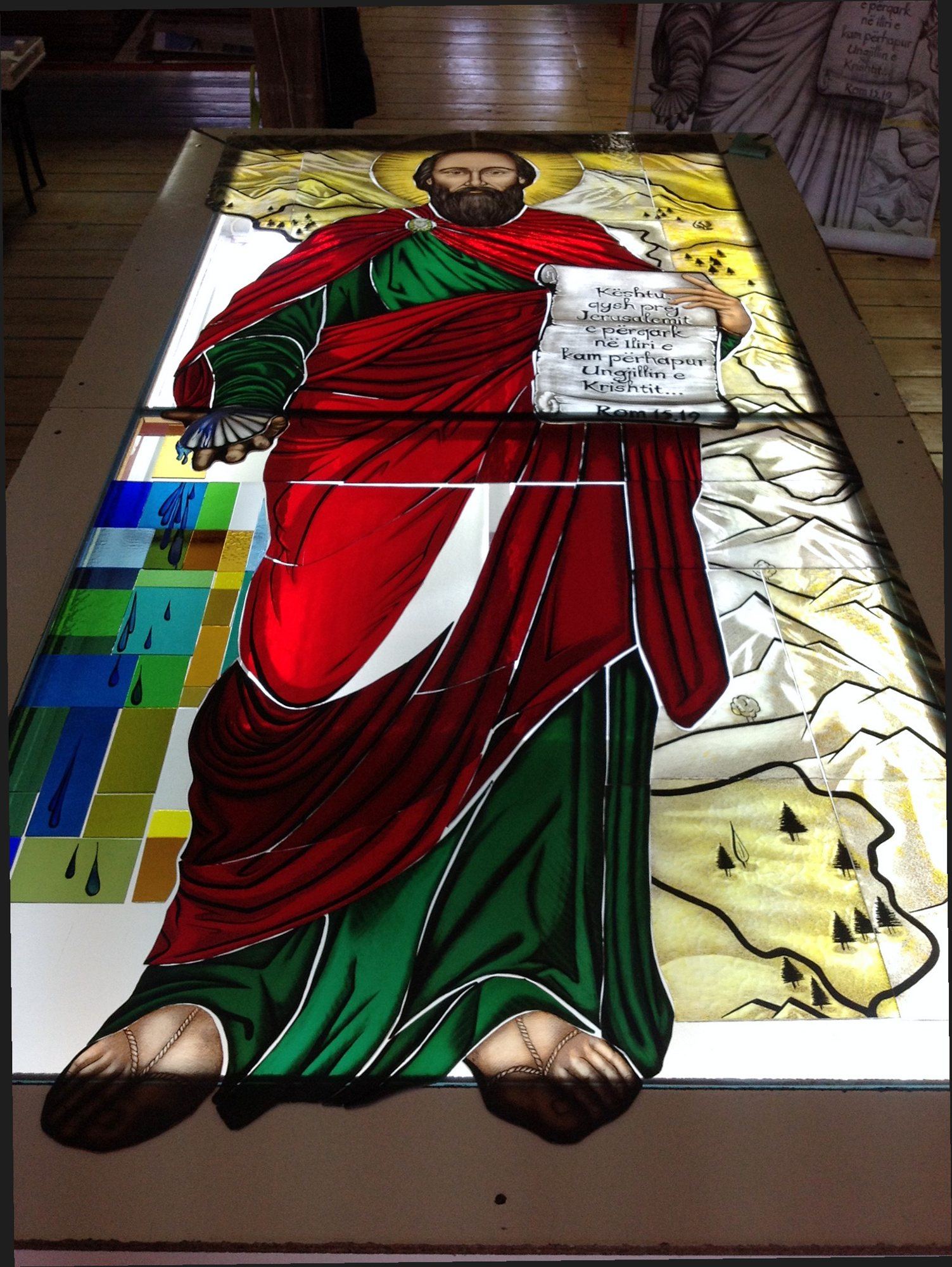 Saint Paul on the light table
The commission
On 26 April 2014 we signed the agreement with Bishop Dodë Gjergji, who then led the Catholic Church in Kosovo as head of the Apostolic Administration of Prizren, for 18 new stained glass windows: 2 for the sanctuary, about 69 square feet each, and 16 for the nave, about 73 square feet each, some 1,300 square feet of glass in all. Stanisic Studio was represented by its owner, Stevan Stanisic, 4th generation of the family studio.
It was a general agreement for every window of the cathedral, to be ordered in phases of at least 4 windows. The first 4, agreed with the bishop in Pristina on 28 March 2014, were the 2 Holy Angels for the sanctuary, Saint Peter and Saint Paul.
Up the bell tower
When I went to Pristina to present our work, I met Bishop Gjergji for the first time. We talked for a long time, and when the meeting was over there was still no decision about whether we would get the commission.
Then the bishop invited me to walk with him up the cathedral tower. We did not take the elevator. We climbed slowly, step by step, and talked all the way to the top. Up there, with the whole city below us, we shook hands, and we got the job.
For me that walk was symbolic. The tensions between Serbs and Albanians after the war in Kosovo were still strong, and here was a Catholic bishop of Kosovo and a stained glass maker from Serbia climbing the same stairs together. Just as in Sarajevo, we proved again that art and humanity have no borders, and that they unite people. We were probably the first company from Serbia to work there after the war.
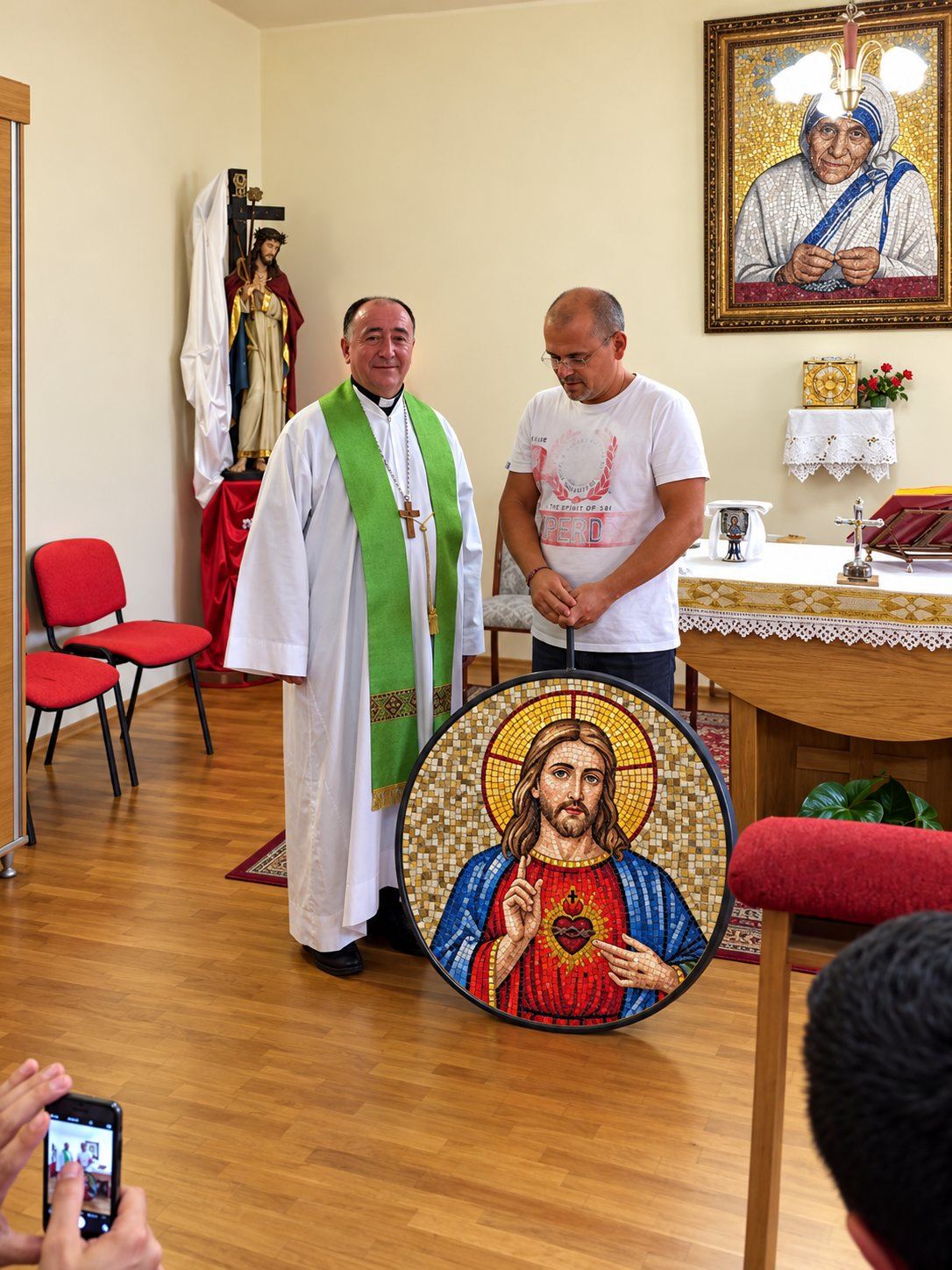
The long road to Pristina
My first trip for this project took me by plane from Belgrade to Istanbul and back again to Pristina, a journey that normally takes just a few hours by car. Once I had worked out how to get there by car across the border, many more trips followed by road, with my whole crew, and every single time we were met with a warm welcome and wonderful hospitality, to the very end of the project.
Made in Sombor
The windows were made in our studio in Sombor, Serbia, in the traditional way. We measured every metal frame in the cathedral, enlarged each approved sketch to full size in 2 copies, and cut a template for every piece. The glass is mouth blown antique glass in many colors, joined with lead came from about 1/8 to 1/2 inch wide. Faces, hands and robes were painted by hand with metal oxide paints and fired in the kiln at about 1,200°F, so the painting becomes part of the glass. Each window was then leaded and sealed with liquid putty on both sides. The windows carry a 50 year guarantee.
This was a huge job and a true team effort, and I thank everyone at Stanisic Studio. Especially Tatjana Armuš, Stefan Stojšić and Nemanja Mudrić for the design and the painting on glass; Tanja Lovrić, Boban Marjanović, senior studio master of stained glass and installation, and Istvan "Pišta" Bala for the fabrication; and Milan Stanisic Junior, Boban, Pišta and Ferenz Silaði for the installation.
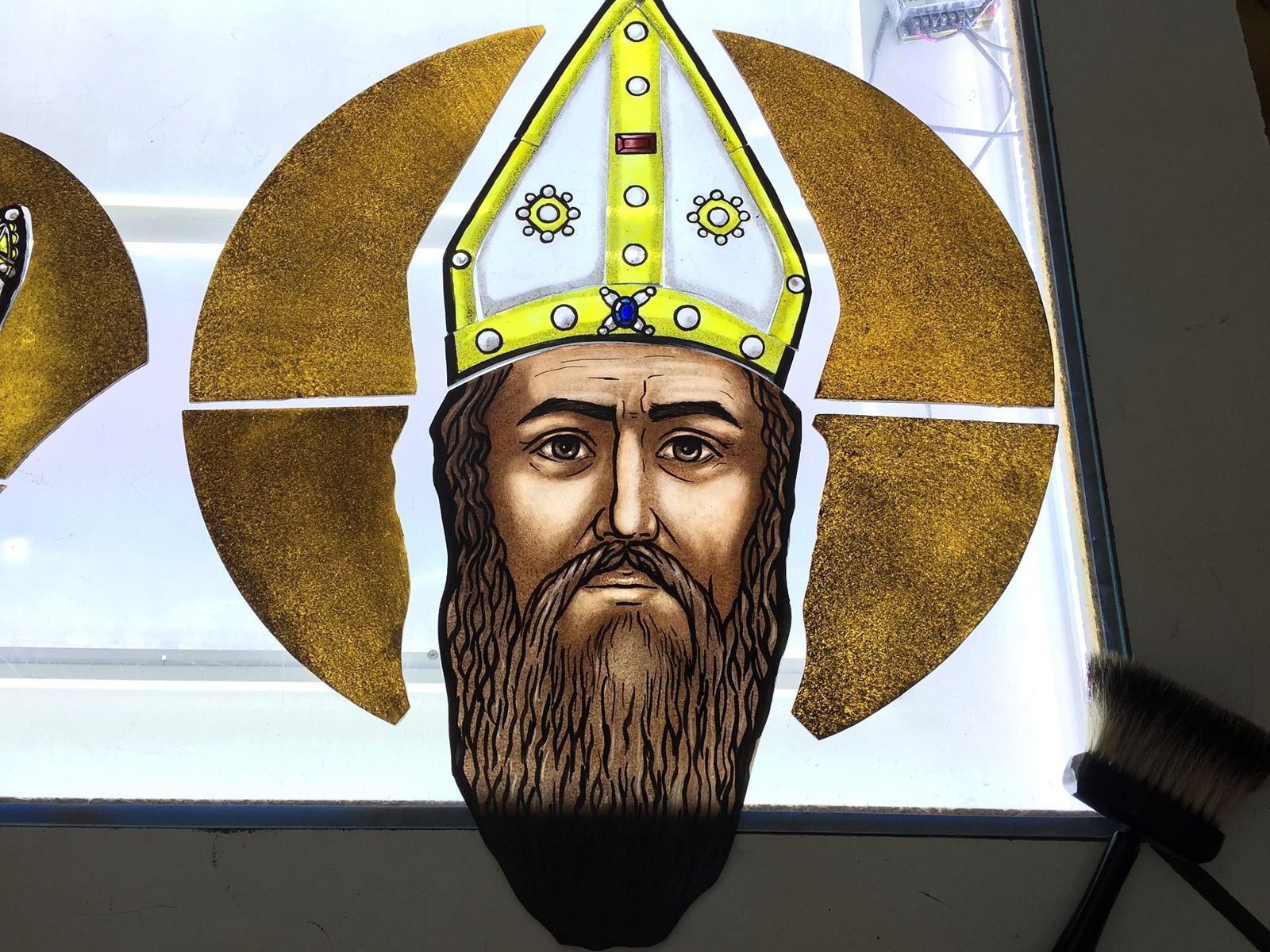 A bishop saint, painted and fired
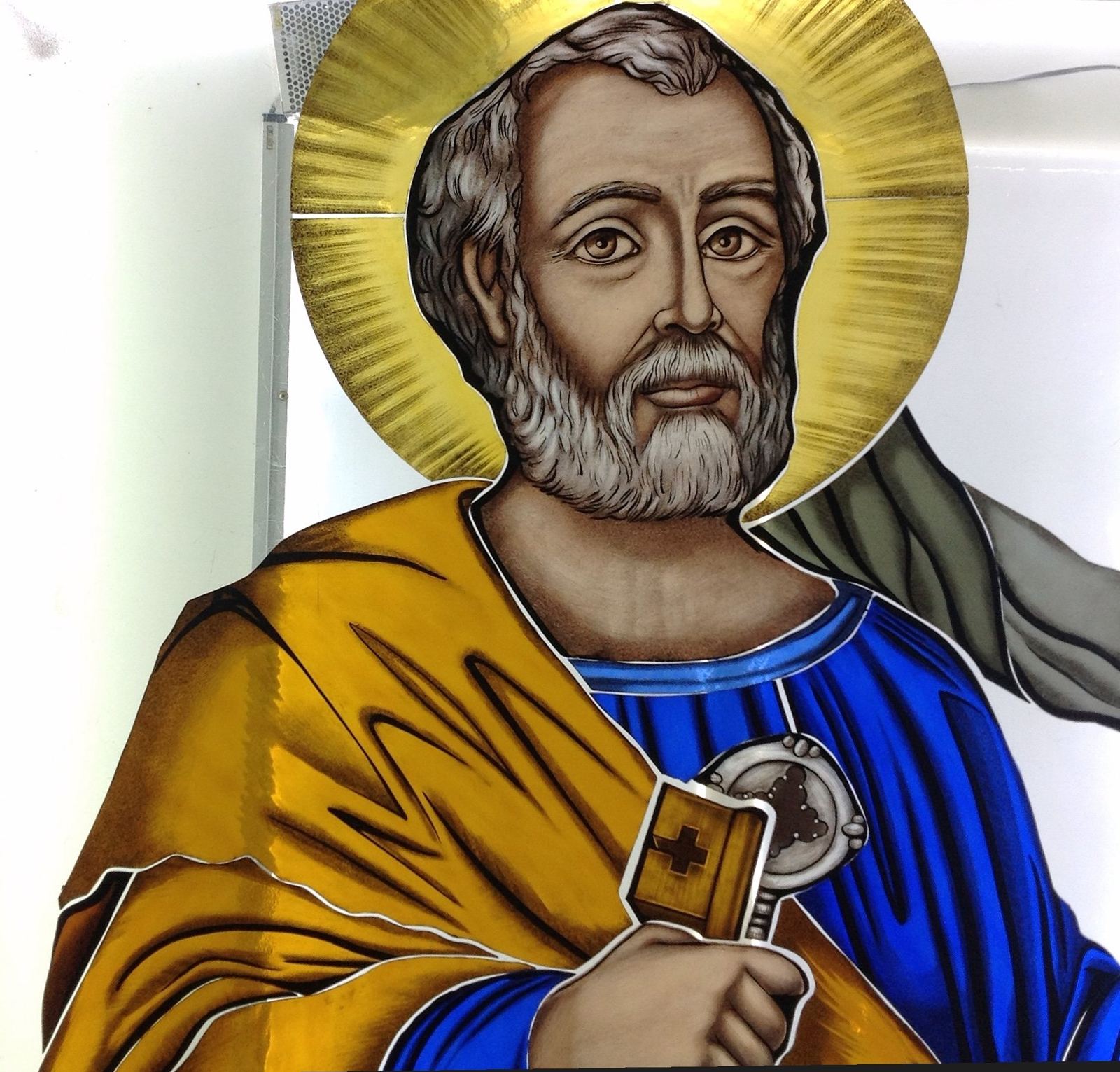 Saint Peter, painted and fired
 Mila Apperlo painting Saint Peter
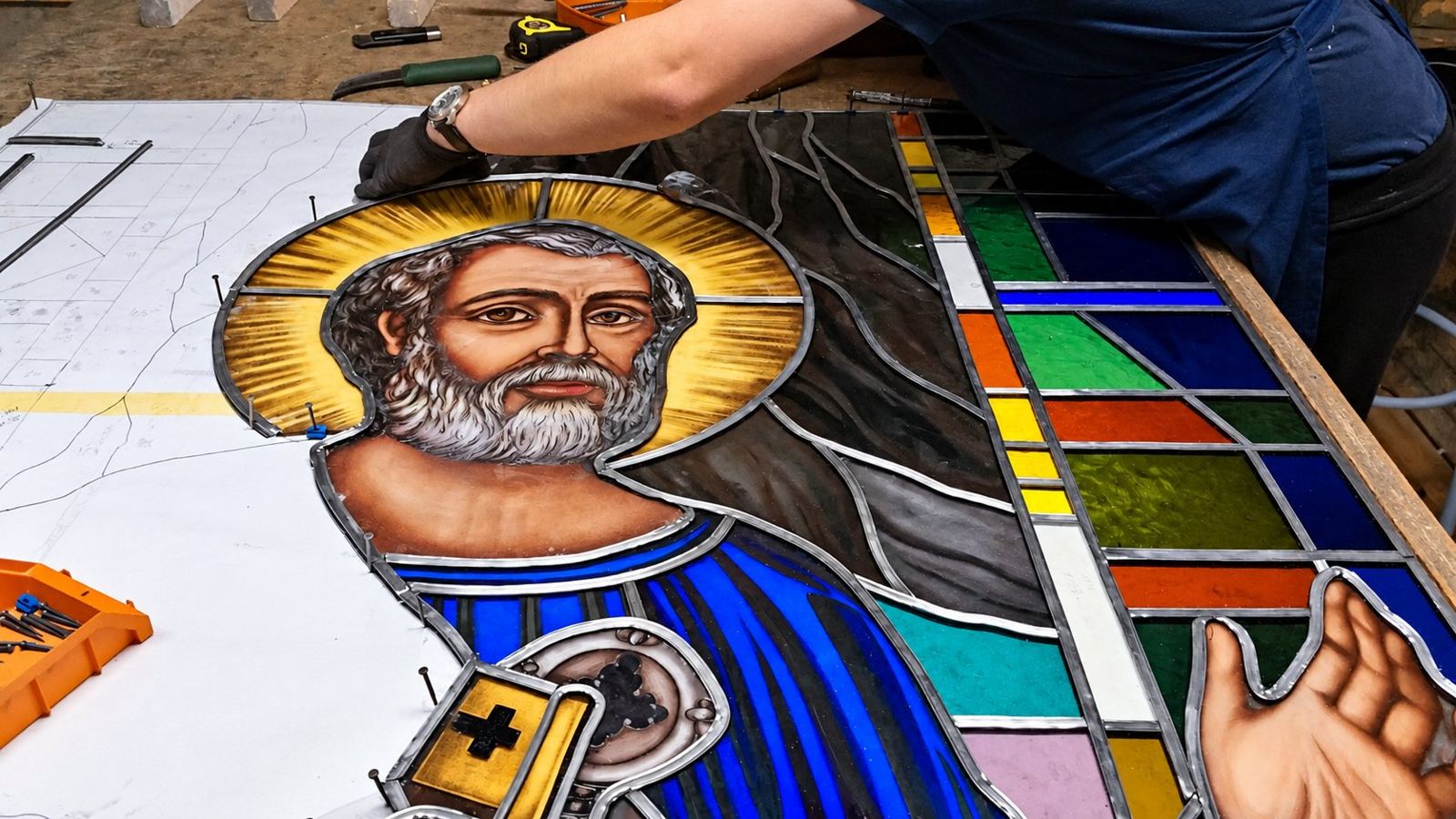 Leading Saint Peter
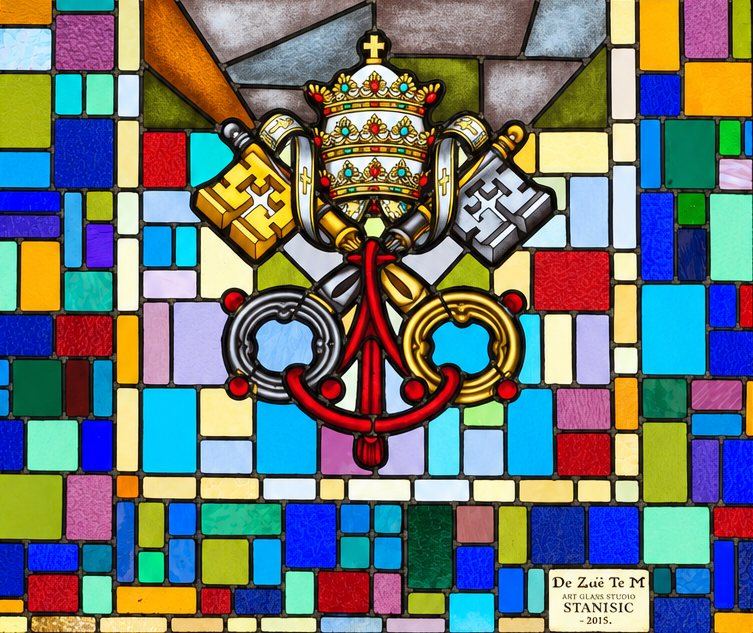
A walk through the windows
Together the windows tell one story: the history of the Catholic Church woven with the history of the Albanian people, from the apostles to our own time. The walk begins as you enter the cathedral, with Saint Paul in the first window on the left and Saint Peter in the first window on the right, and it ends at the altar, with the 2 Holy Angels.
Saint Paul and Saint Peter
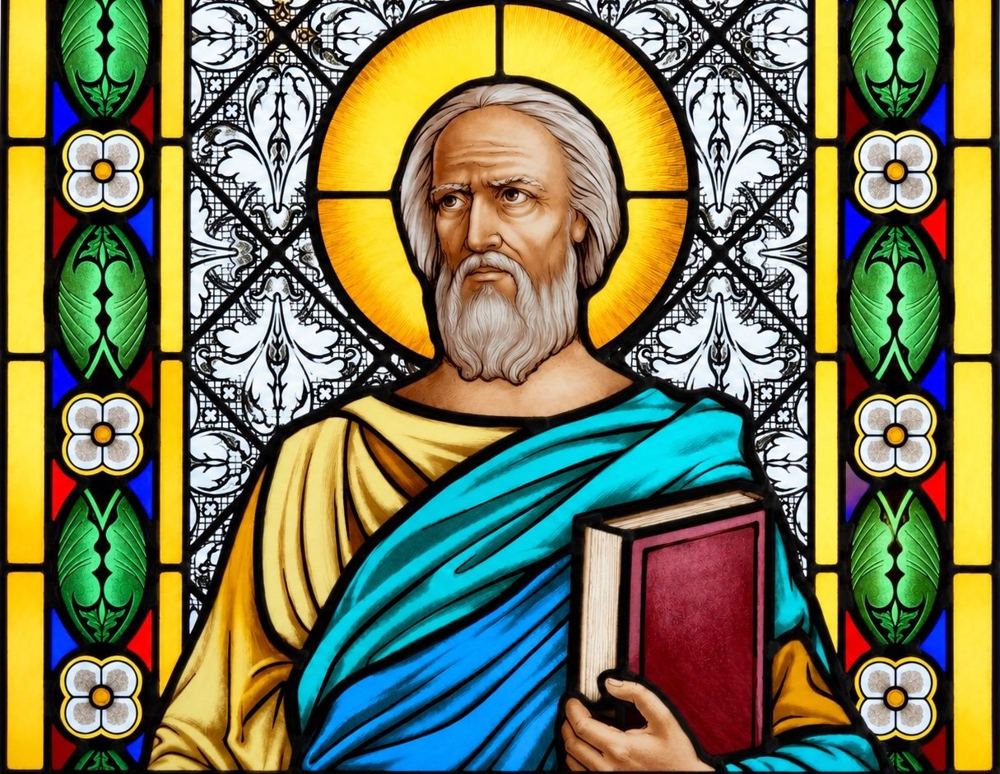
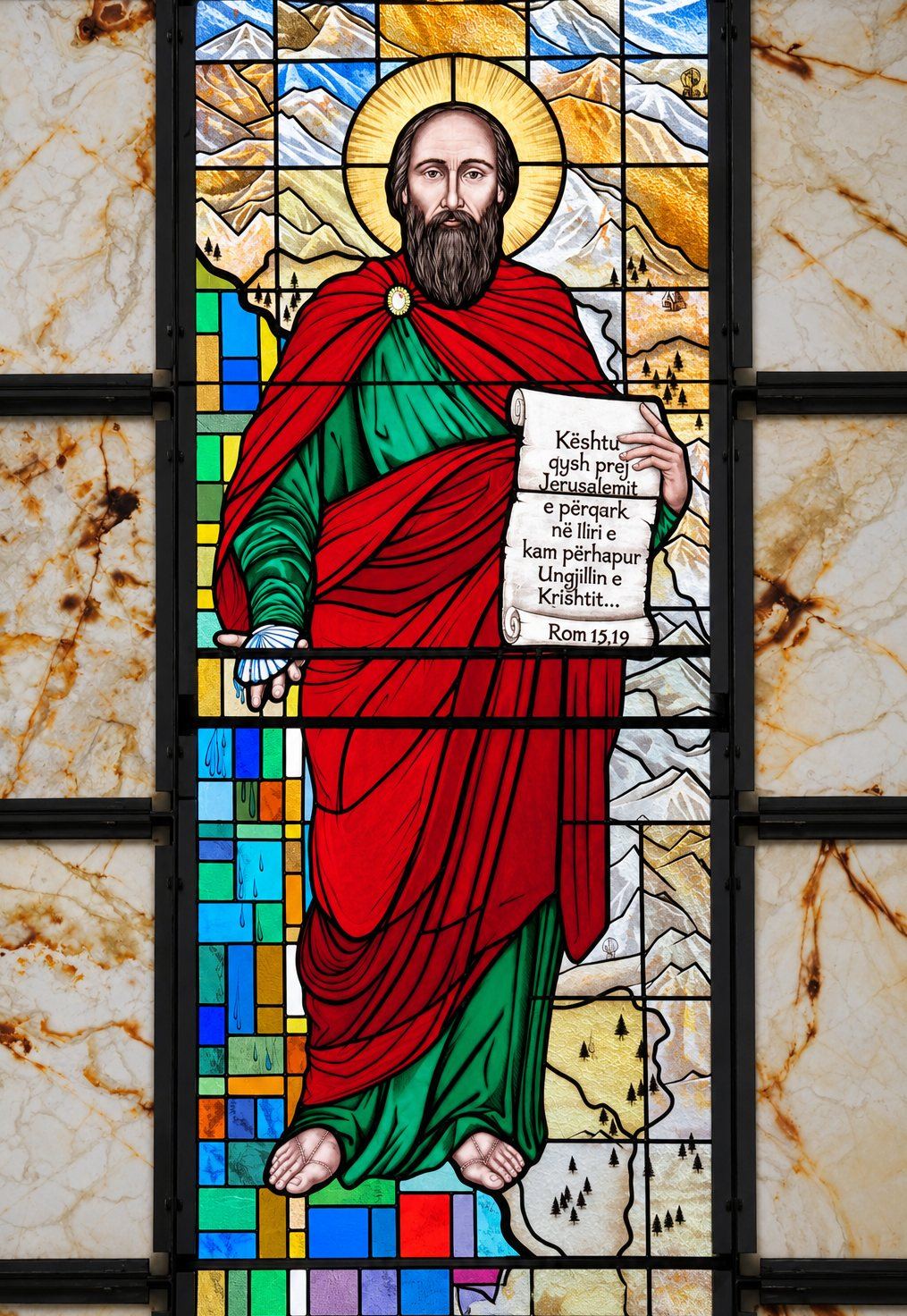
Saint Paul holds his letter to the Romans, open at the verse where he says he preached the Gospel all the way to Illyricum (Romans 15:19), and he stands on the map of the Adriatic between Illyricum and Dyrrachium, today's Durrës. Across the nave, Saint Peter holds the keys of the Kingdom.
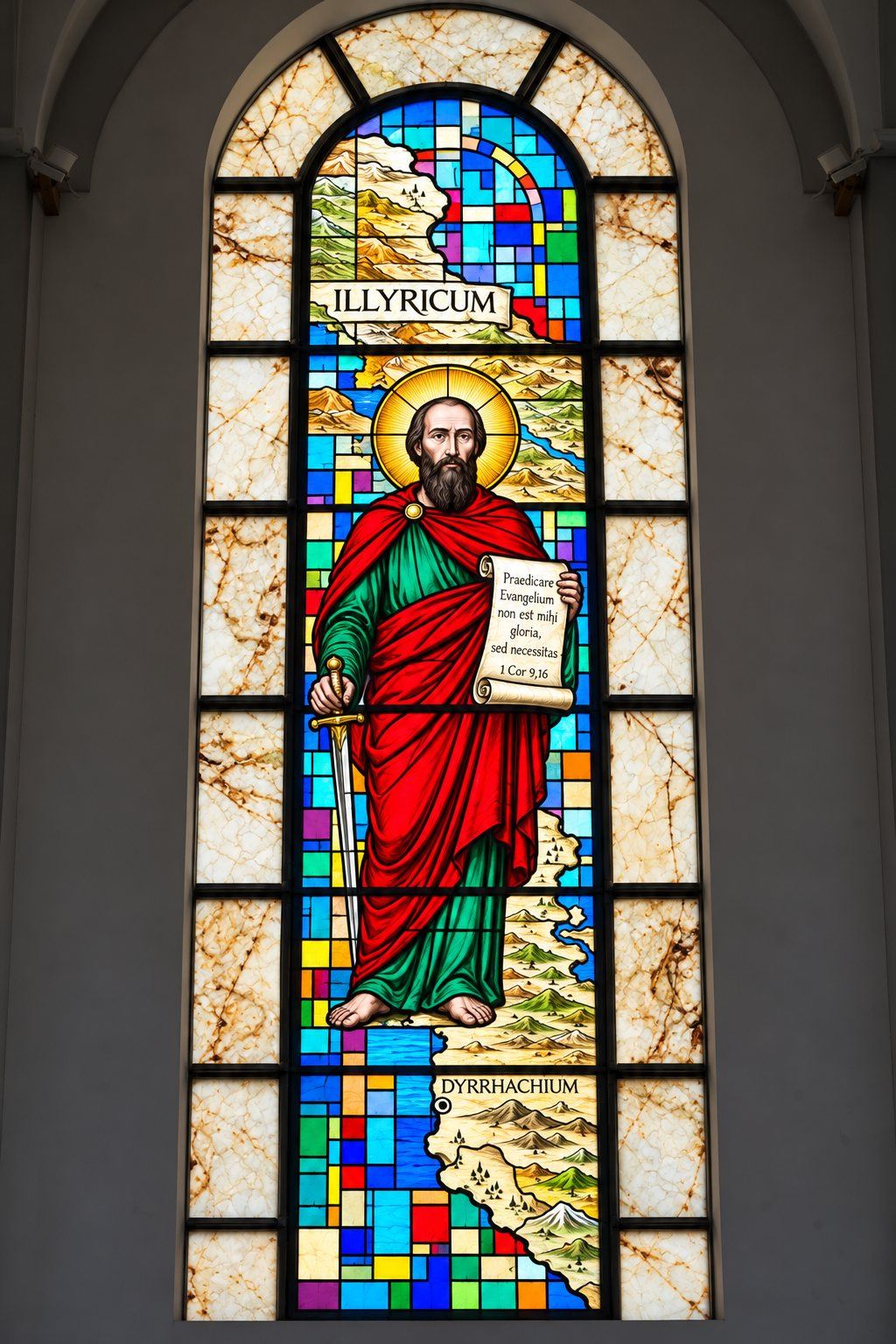 Saint Paul, first window on the left
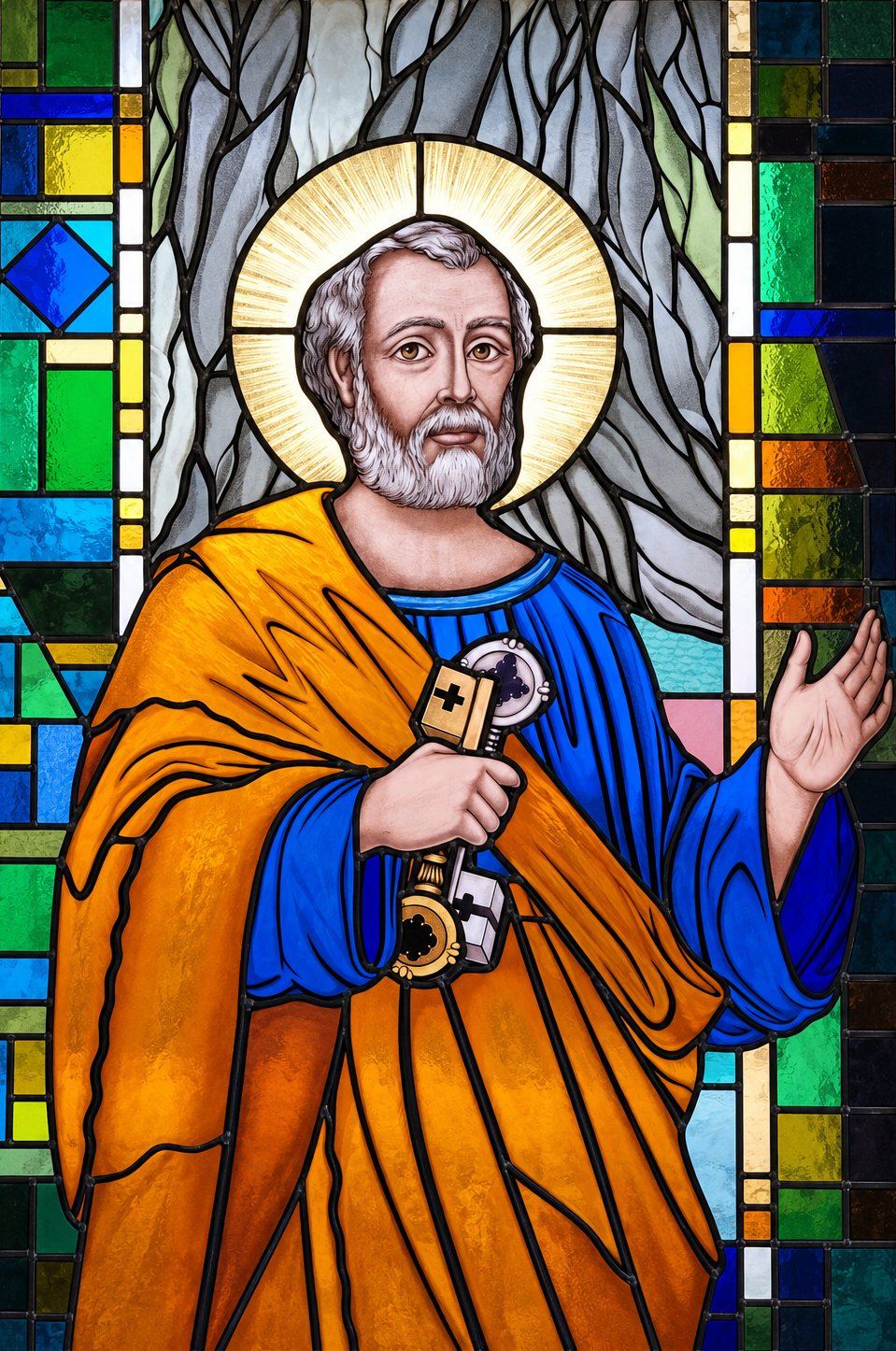 Saint Peter, first window on the right
Saint Astius of Dyrrachium
Saint Astius, bishop of Dyrrachium, died a martyr on the cross; here he is bound beneath a great tree, with a ship and the crowd of the faithful around him.
 Saint Astius of Dyrrachium
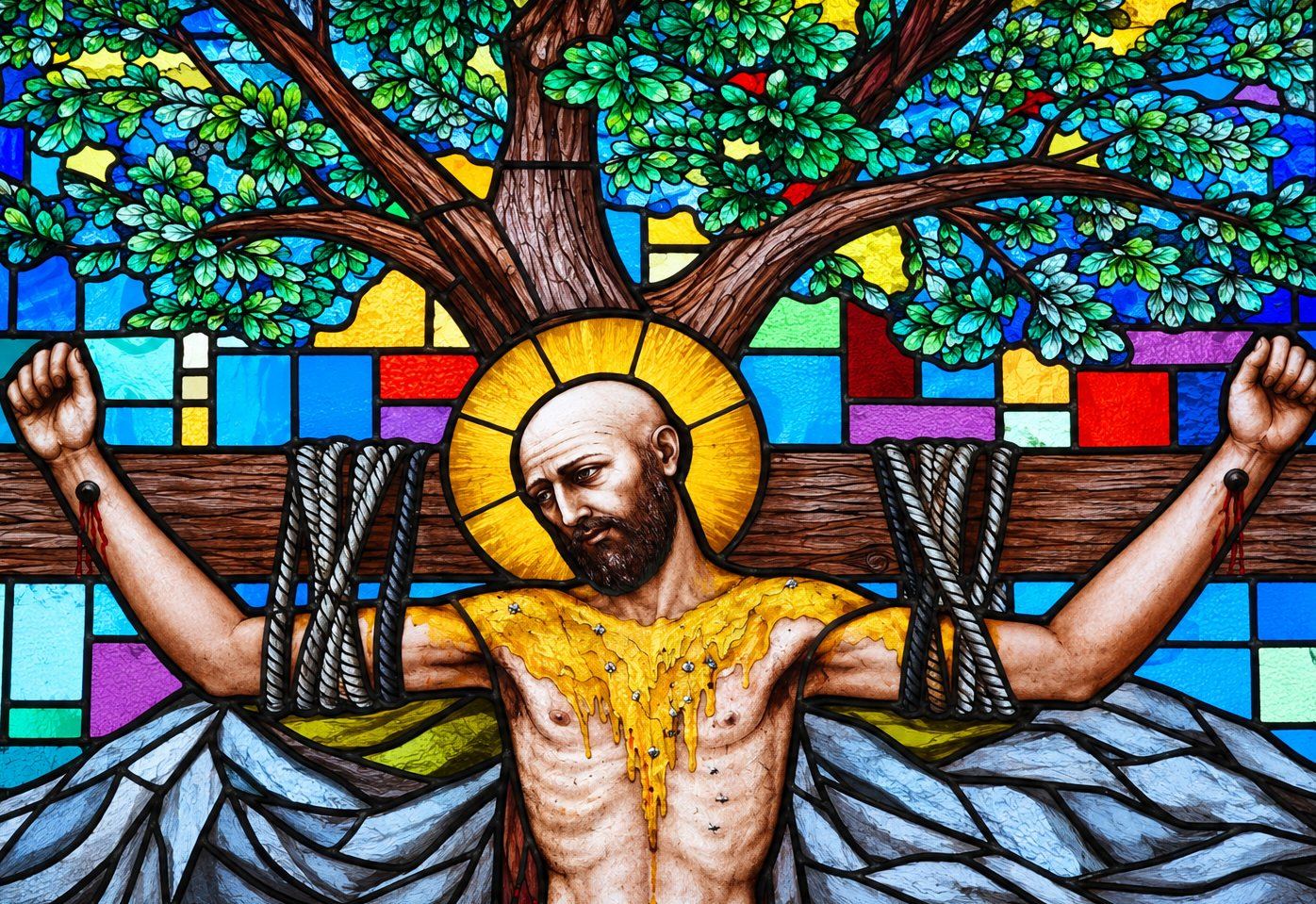 The martyr
Saints Florus and Laurus of Ulpiana
Saints Florus and Laurus, stonecutters martyred at Ulpiana, near present day Pristina, stand together under the name of their ancient city.
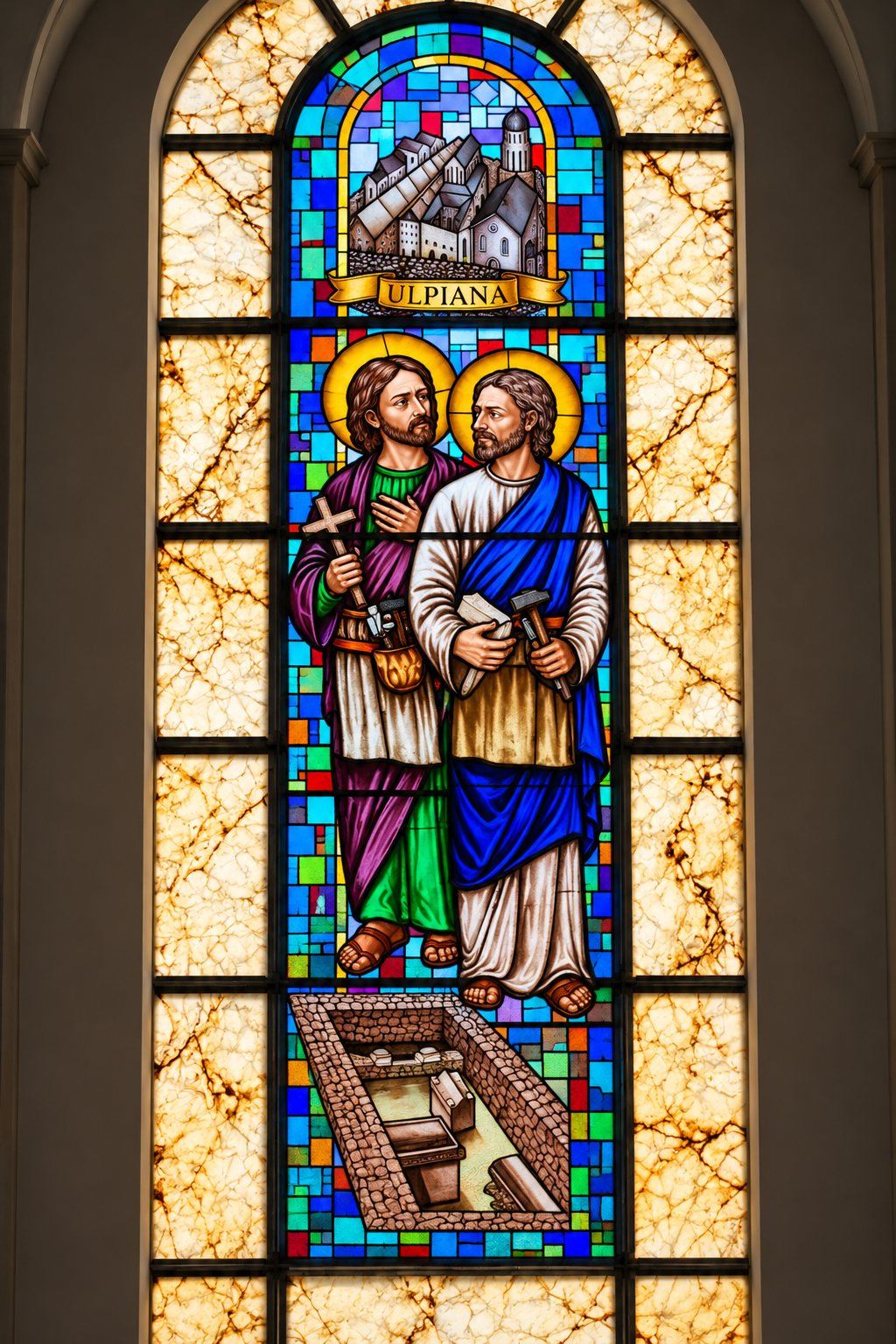 Florus and Laurus of Ulpiana
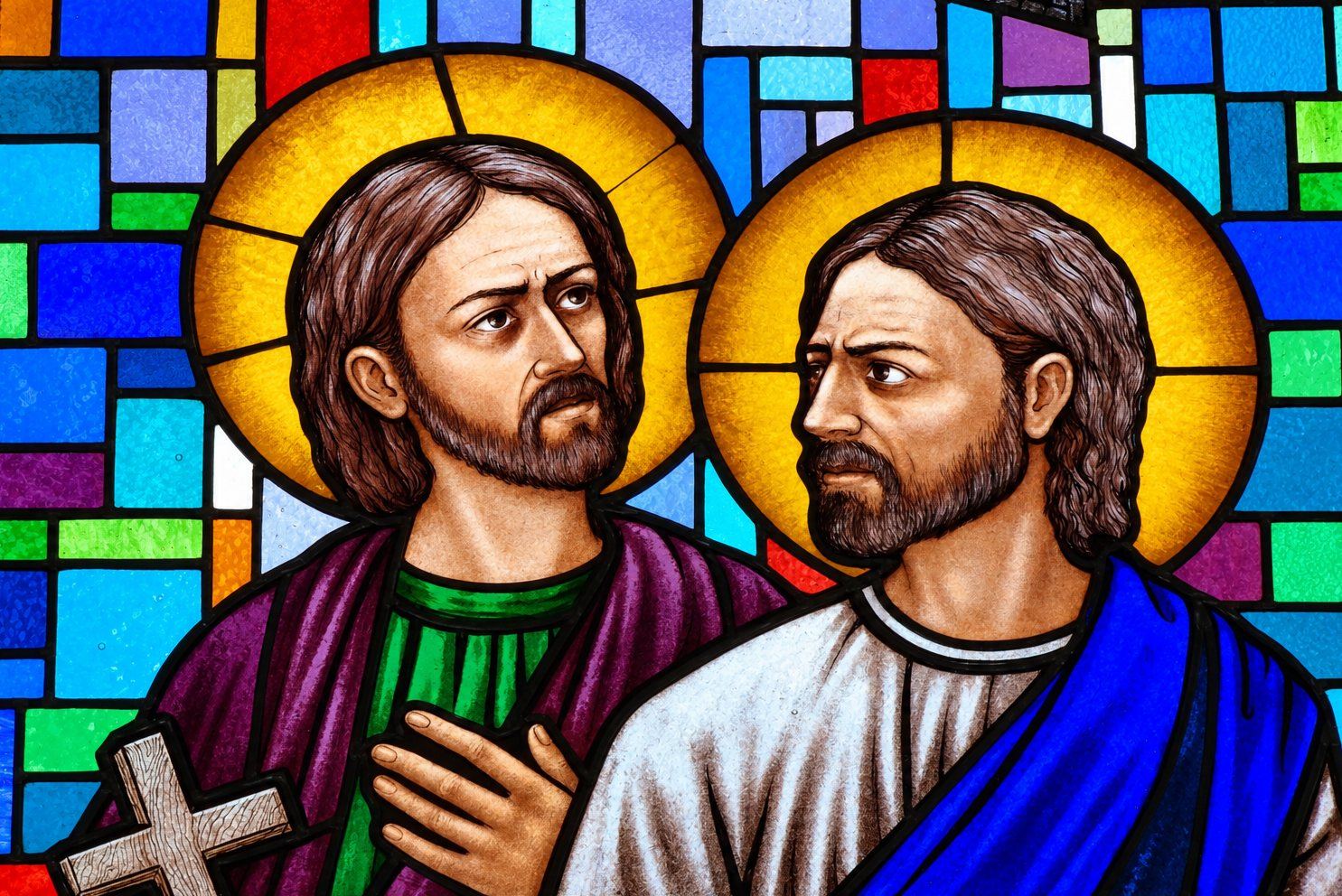 Florus and Laurus
The Council of Nicaea
At the First Council of Nicaea in 325, the bishops of the Church proclaimed the Creed, and among them, according to the history of the region, was Dacus, bishop of Dardania, the ancient land of Kosovo. In the window the bishops hold the Creed in Latin and in Albanian: Credo in unum Deum, Besoj në një Hyj të vetëm.
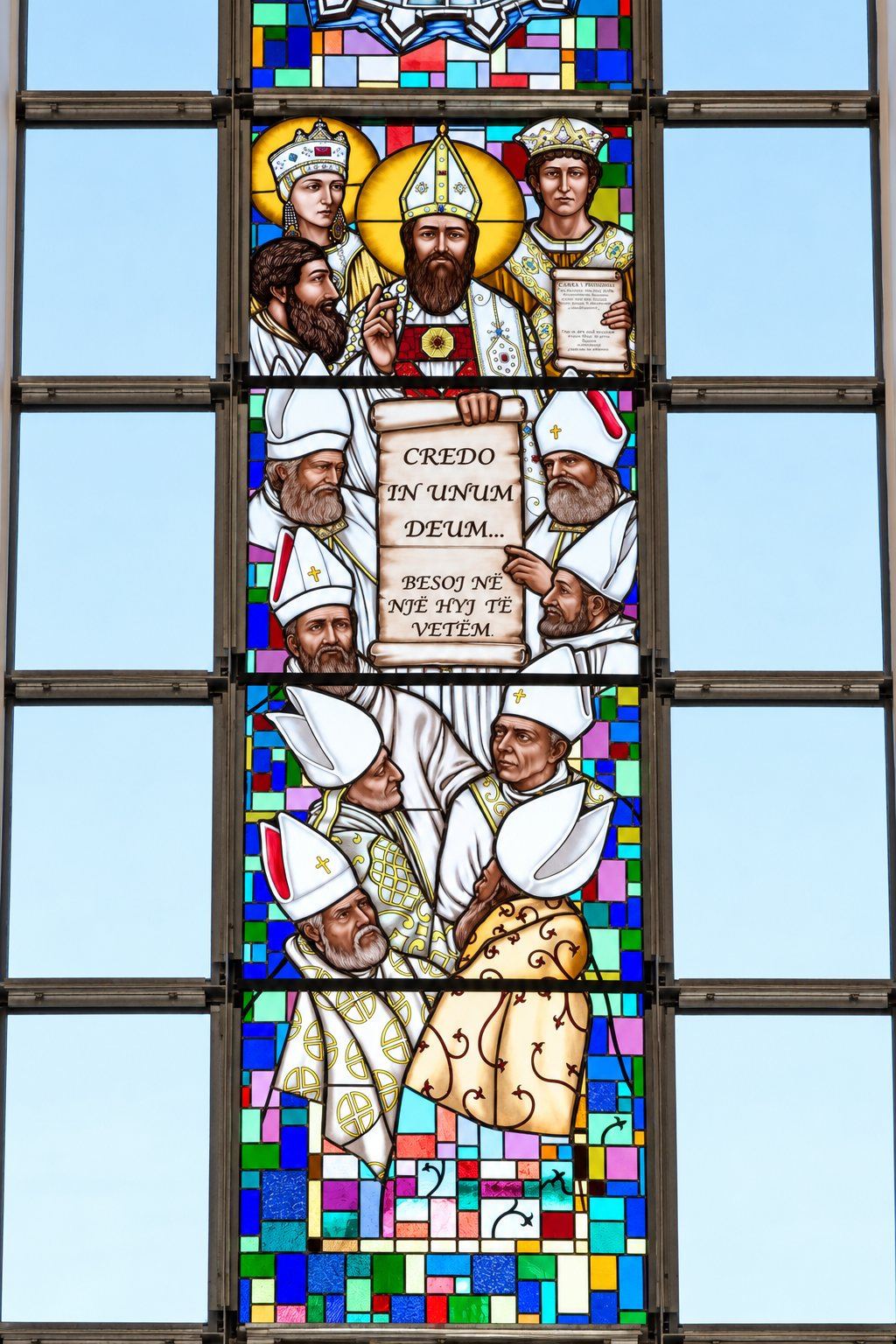 The Council of Nicaea
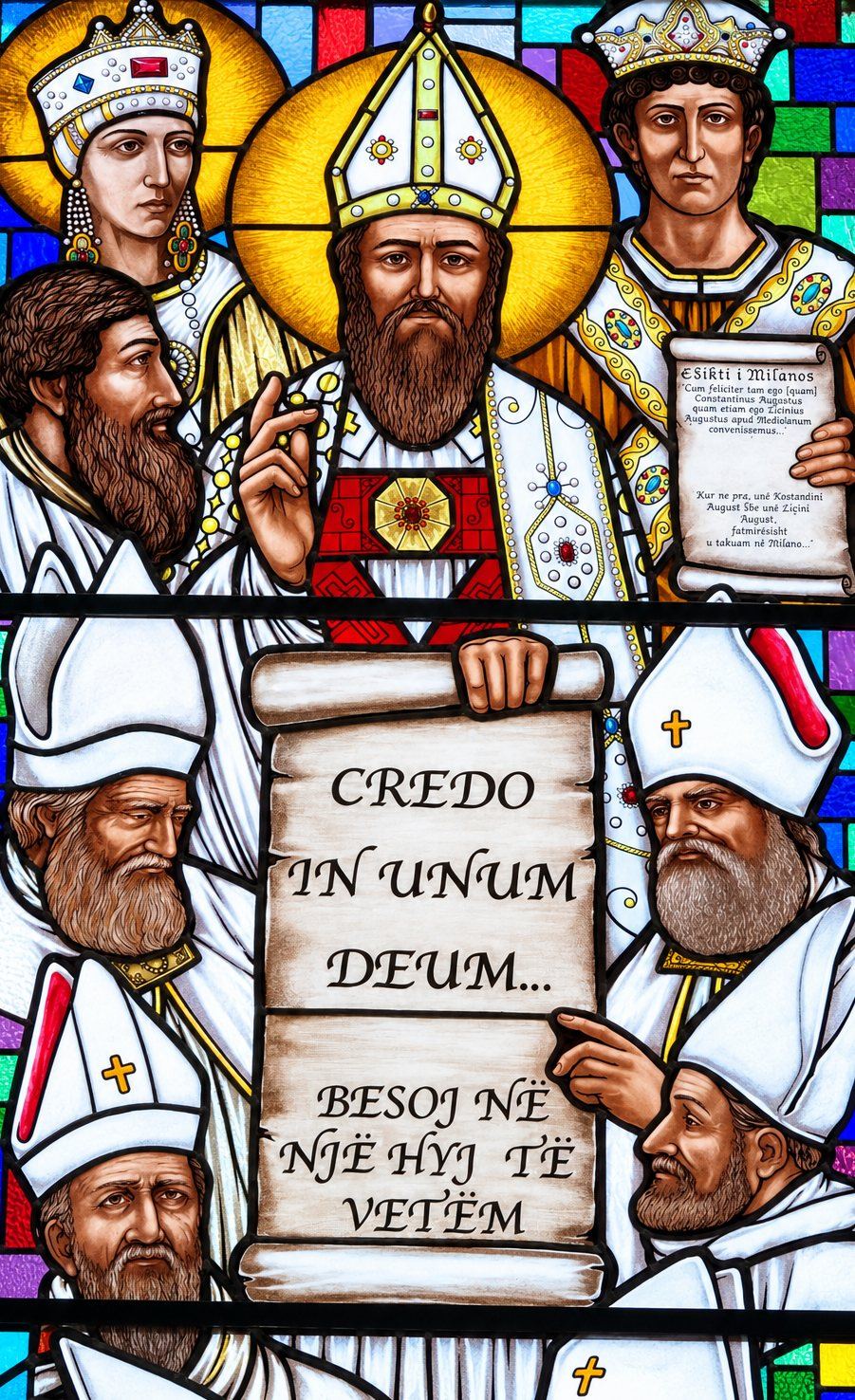 Credo in unum Deum
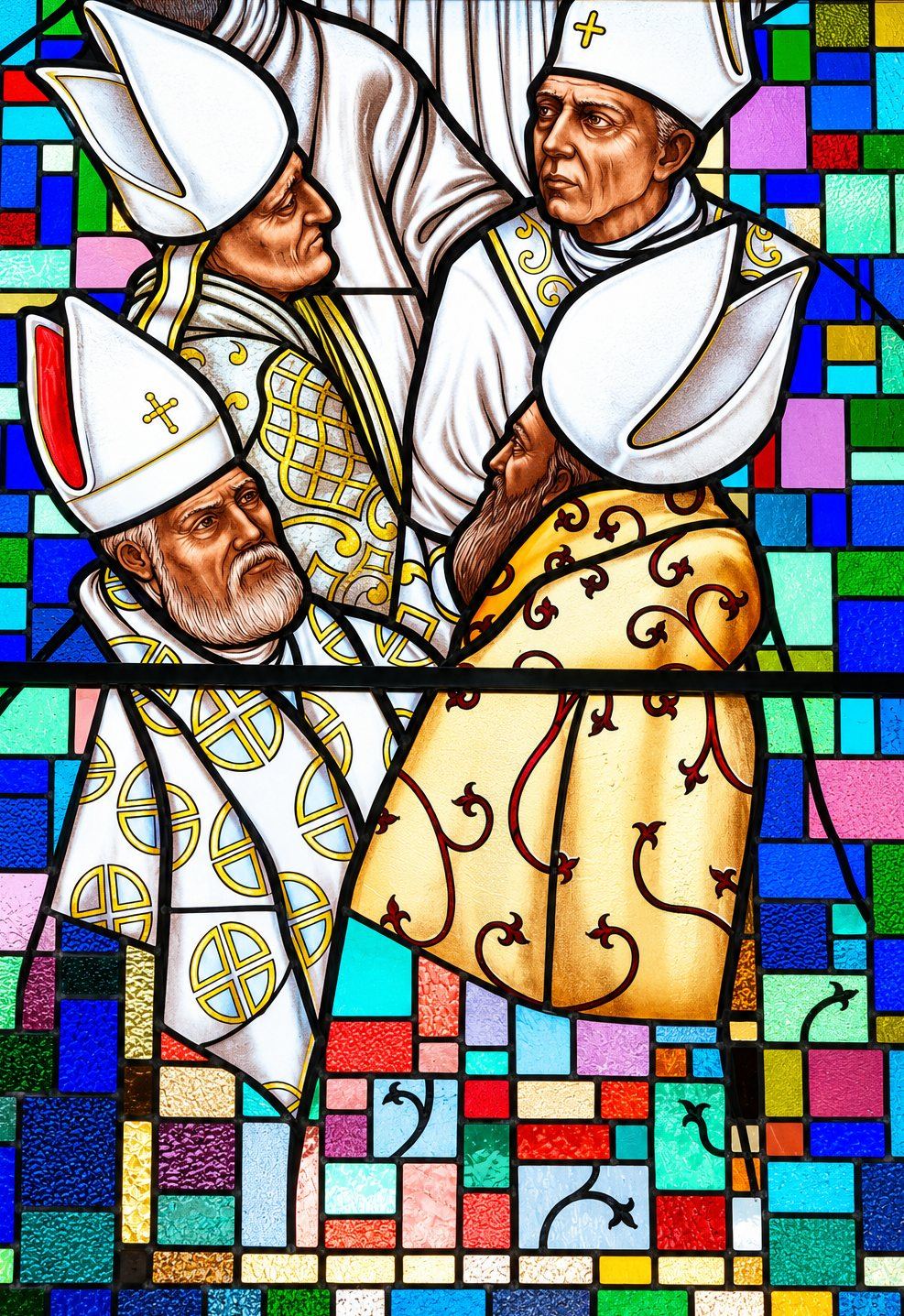
Saint Nicetas of Remesiana
Saint Nicetas of Remesiana, the missionary bishop to whom the great hymn Te Deum is traditionally attributed, writes it with a quill, with a lamb at his feet.
 Nicetas of Remesiana
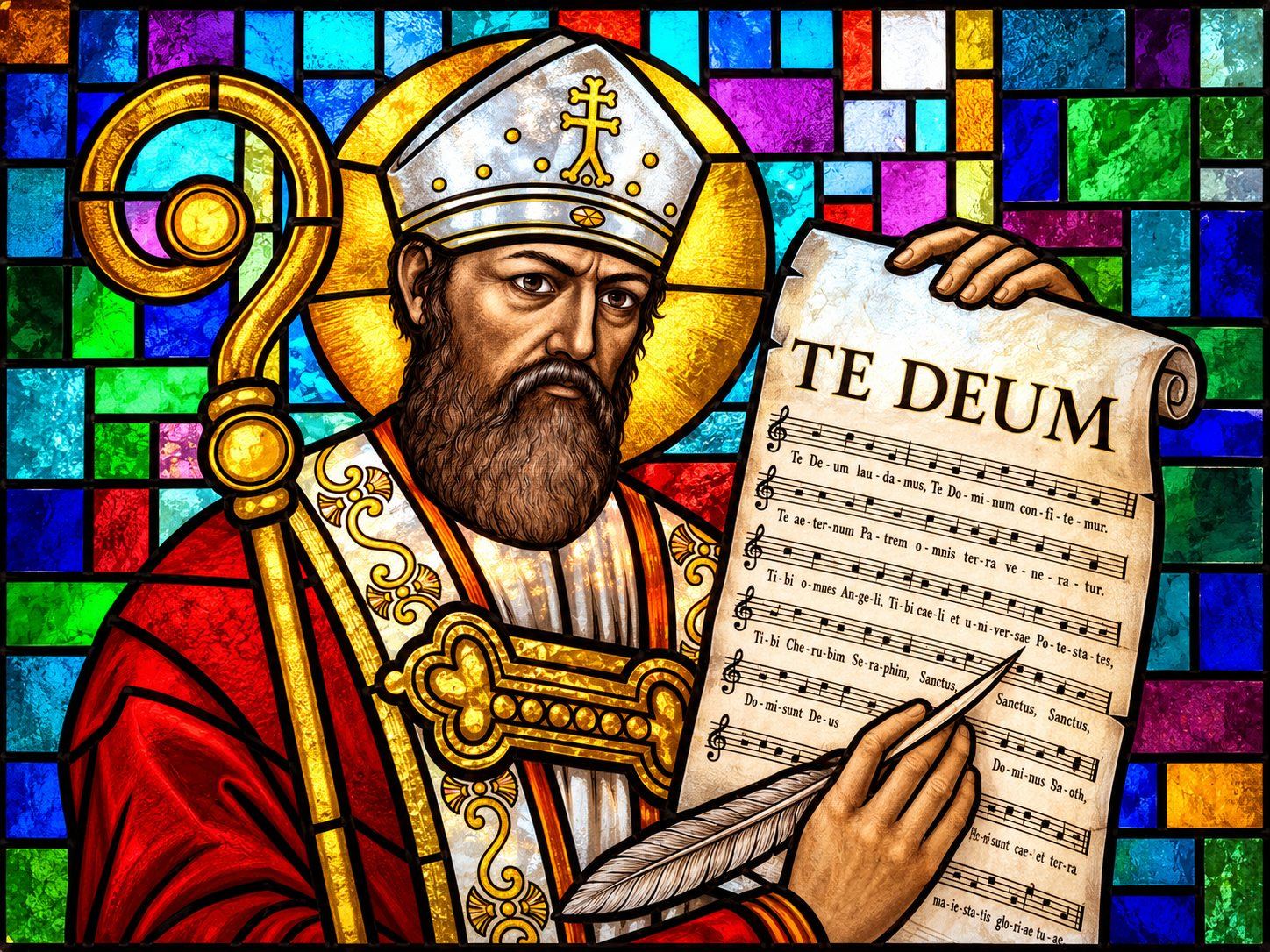 Te Deum
Saint Jerome
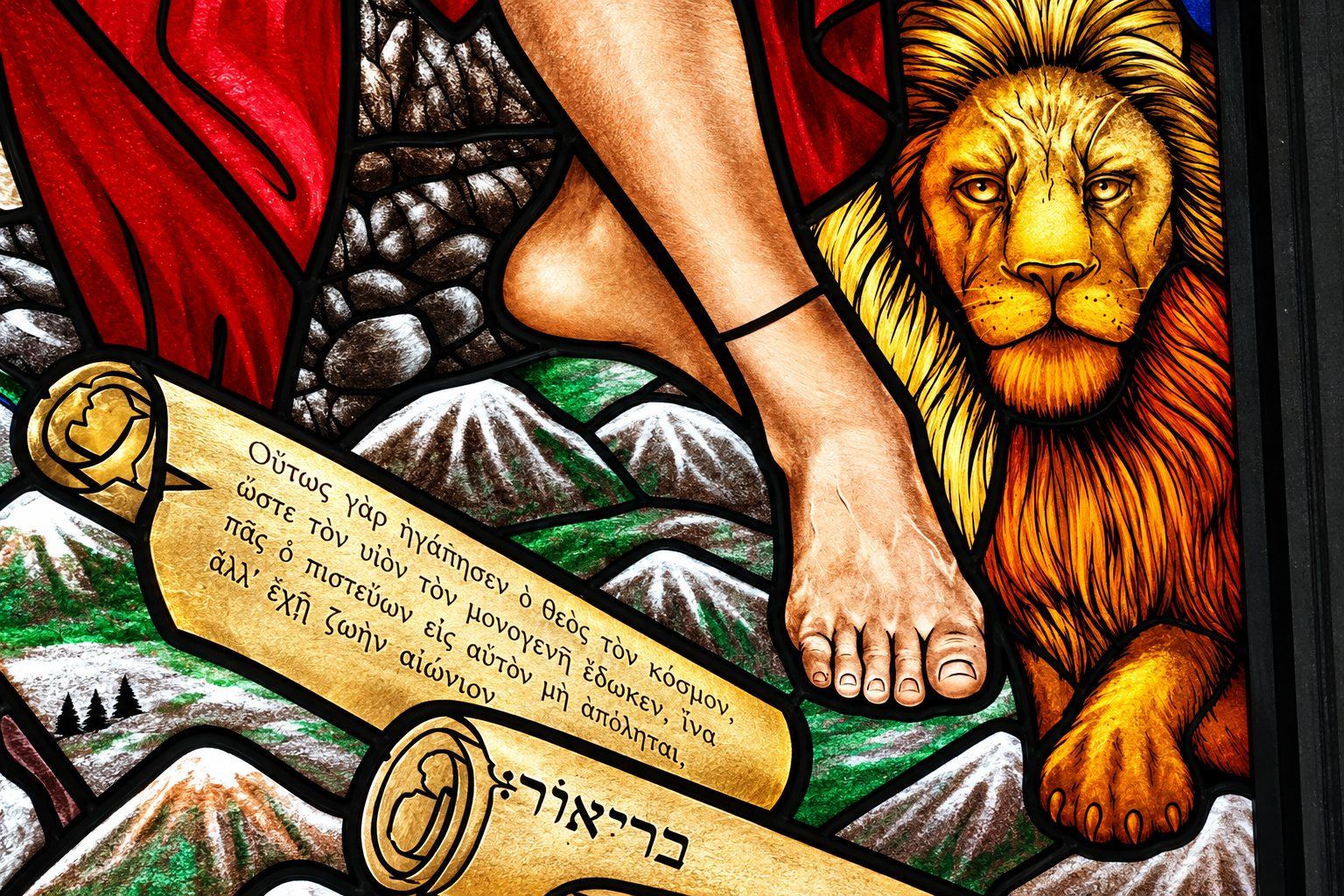
Saint Jerome, born at Stridon in the Roman Balkans, sits with his lion and the Biblia Sacra Vulgata, the Latin Bible he translated, with verses written in Hebrew, Greek and Latin.
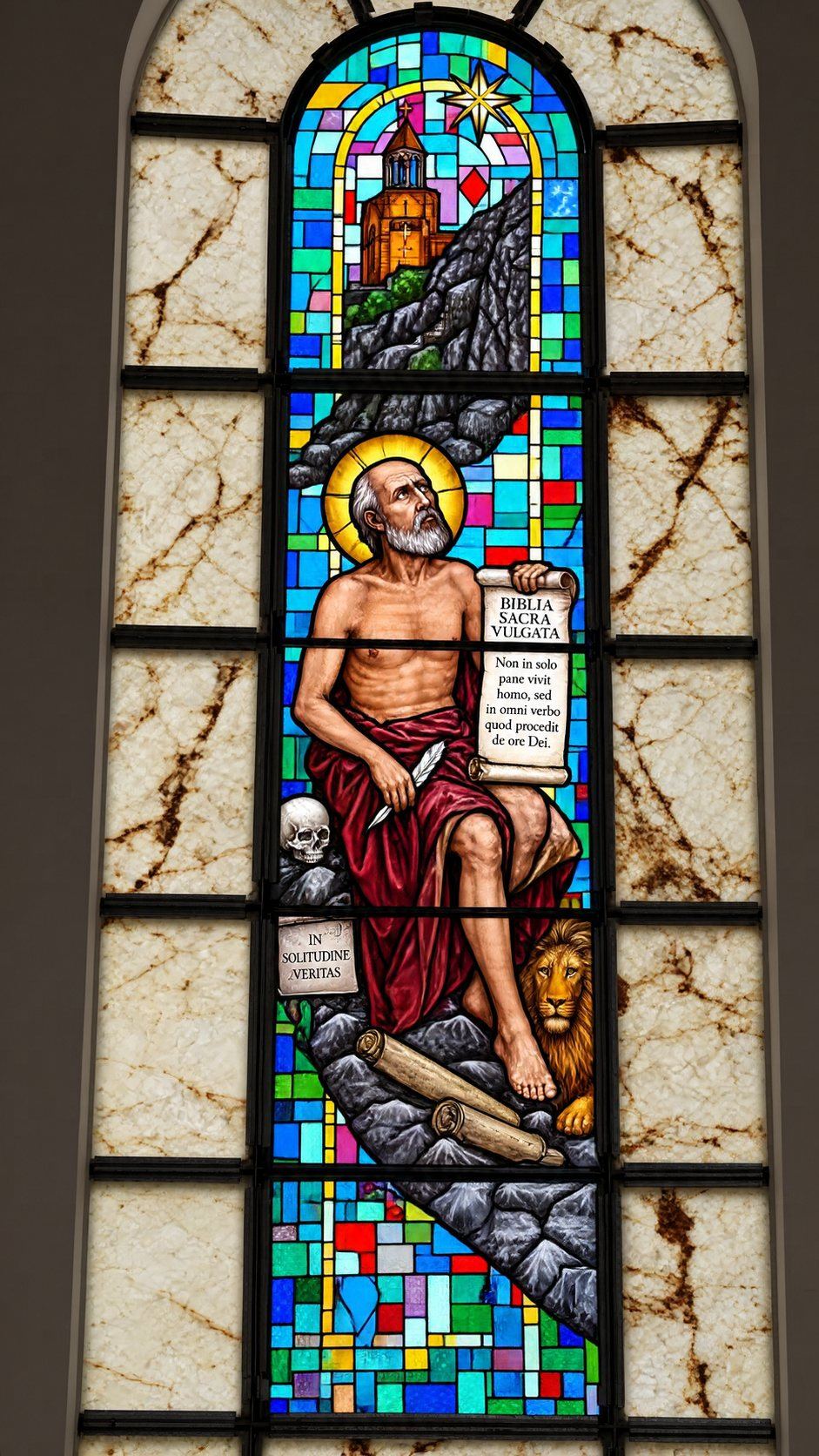 Saint Jerome
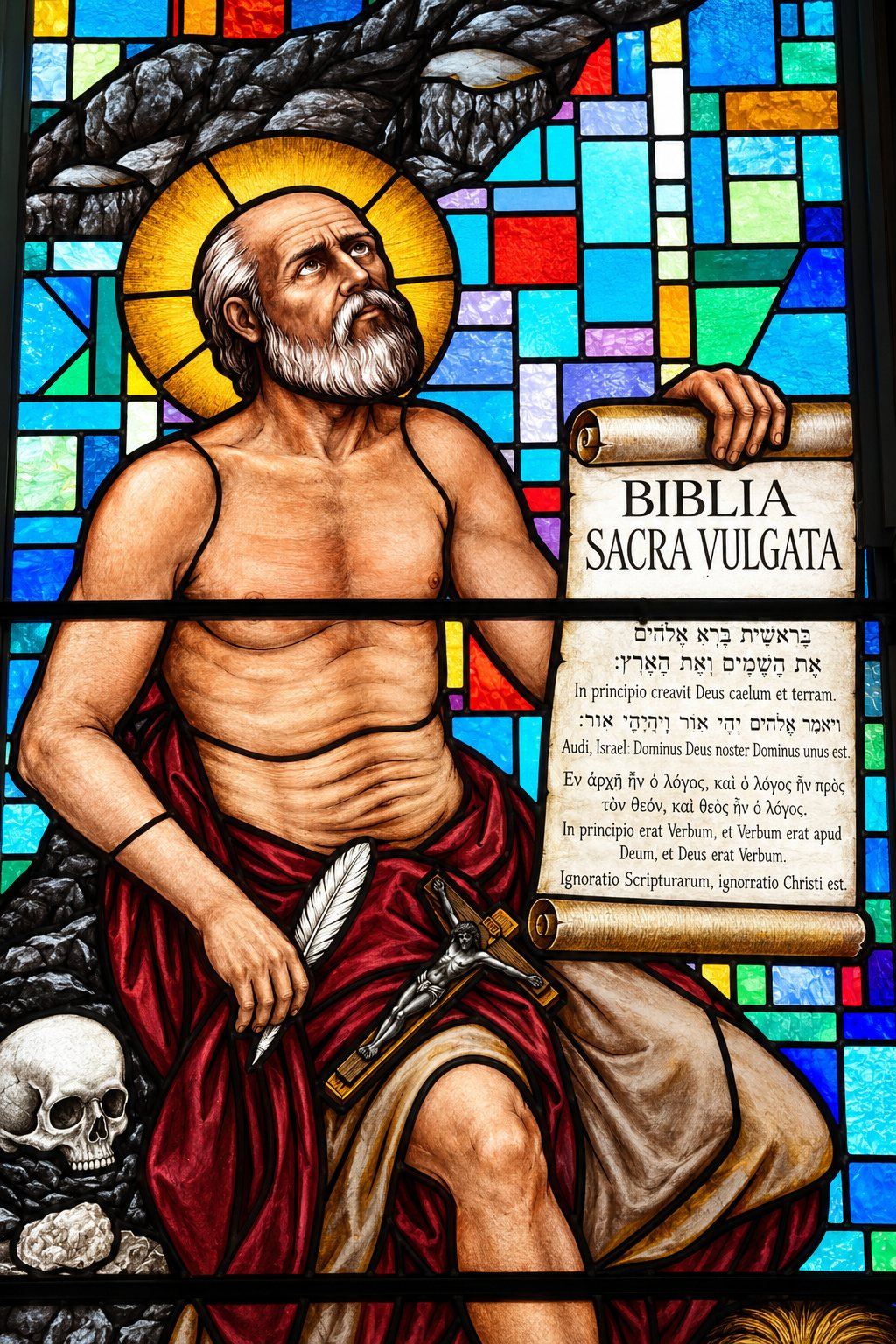 Biblia Sacra Vulgata
Skanderbeg, Athleta Christi
Skanderbeg, the Albanian national hero whom the popes called Athleta Christi, stands with his goat headed helmet beside a pope and a bishop, over the map of the Adriatic.
 Athleta Christi
 Skanderbeg
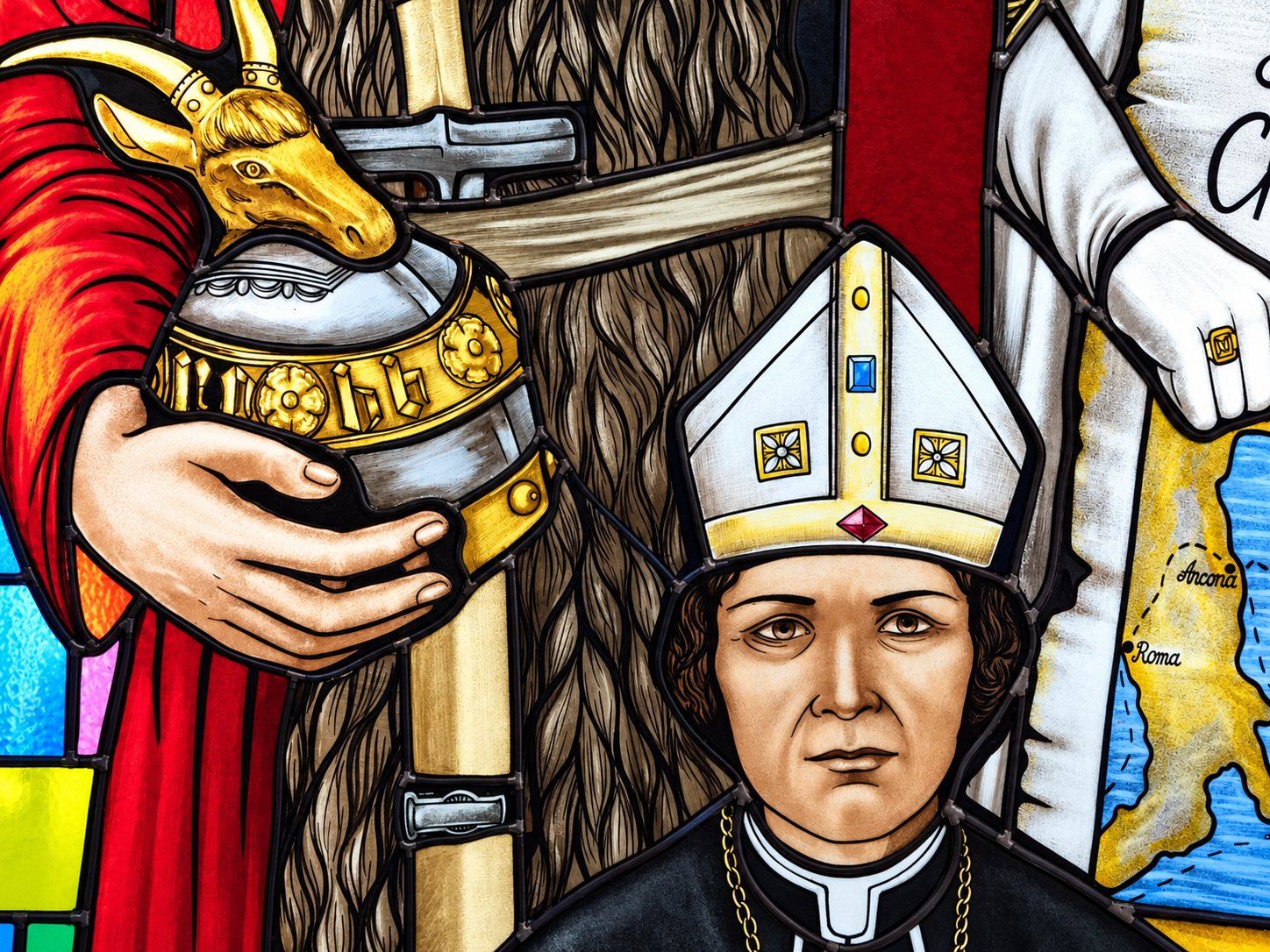 The helmet
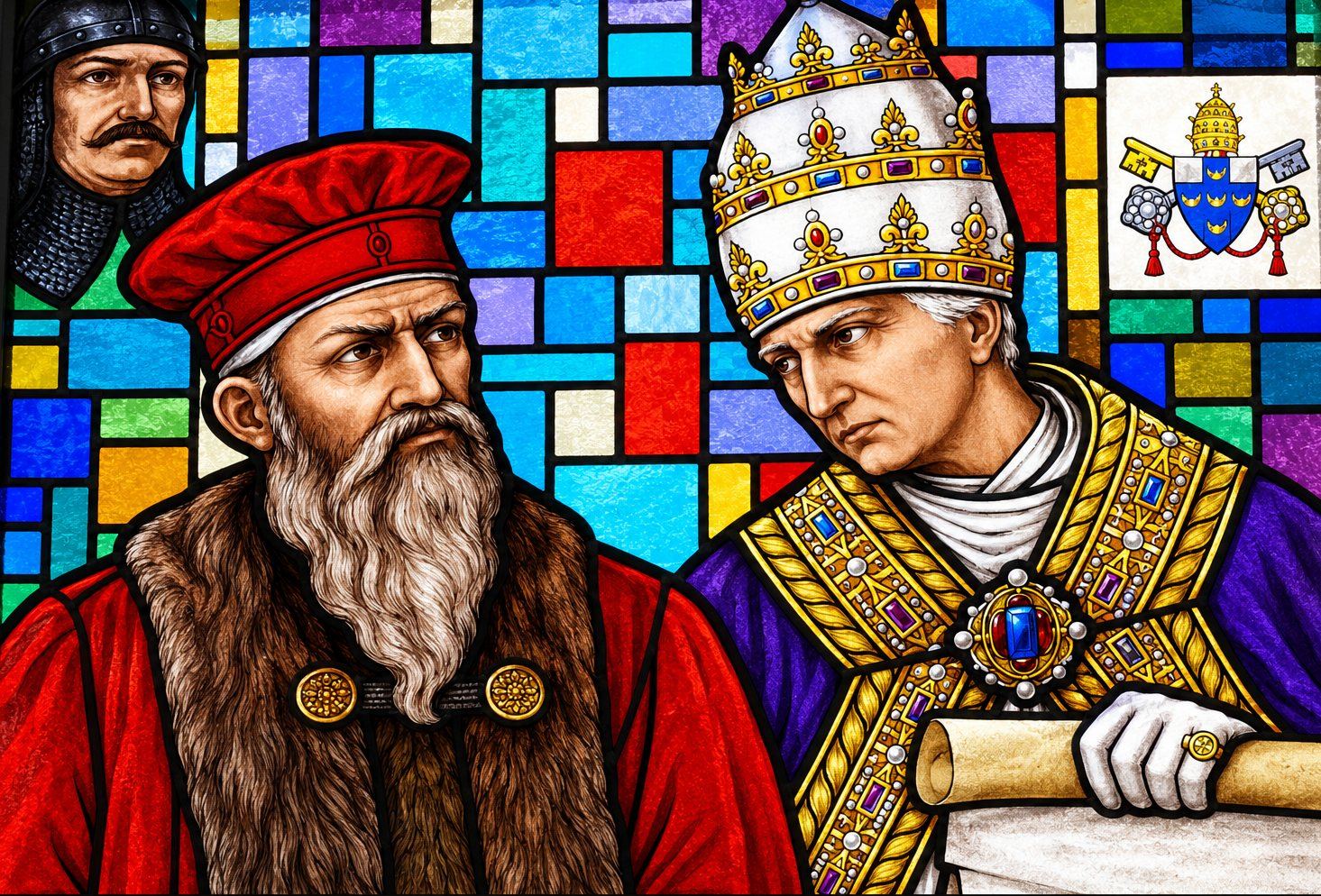 Skanderbeg and the pope
Pope Clement XI and the Albanian popes
Albanian tradition remembers several popes from the ancient lands of Illyria and Epirus, among them Saint Eleutherius in the 2nd century and John IV, from Dalmatia, in the 7th, although other nations claim them too. The pope whose Albanian roots are best known is Clement XI, of the Albani family, who reigned from 1700 to 1721. In his window he holds the scroll that remembers the Council of the Albanians called in 1703.
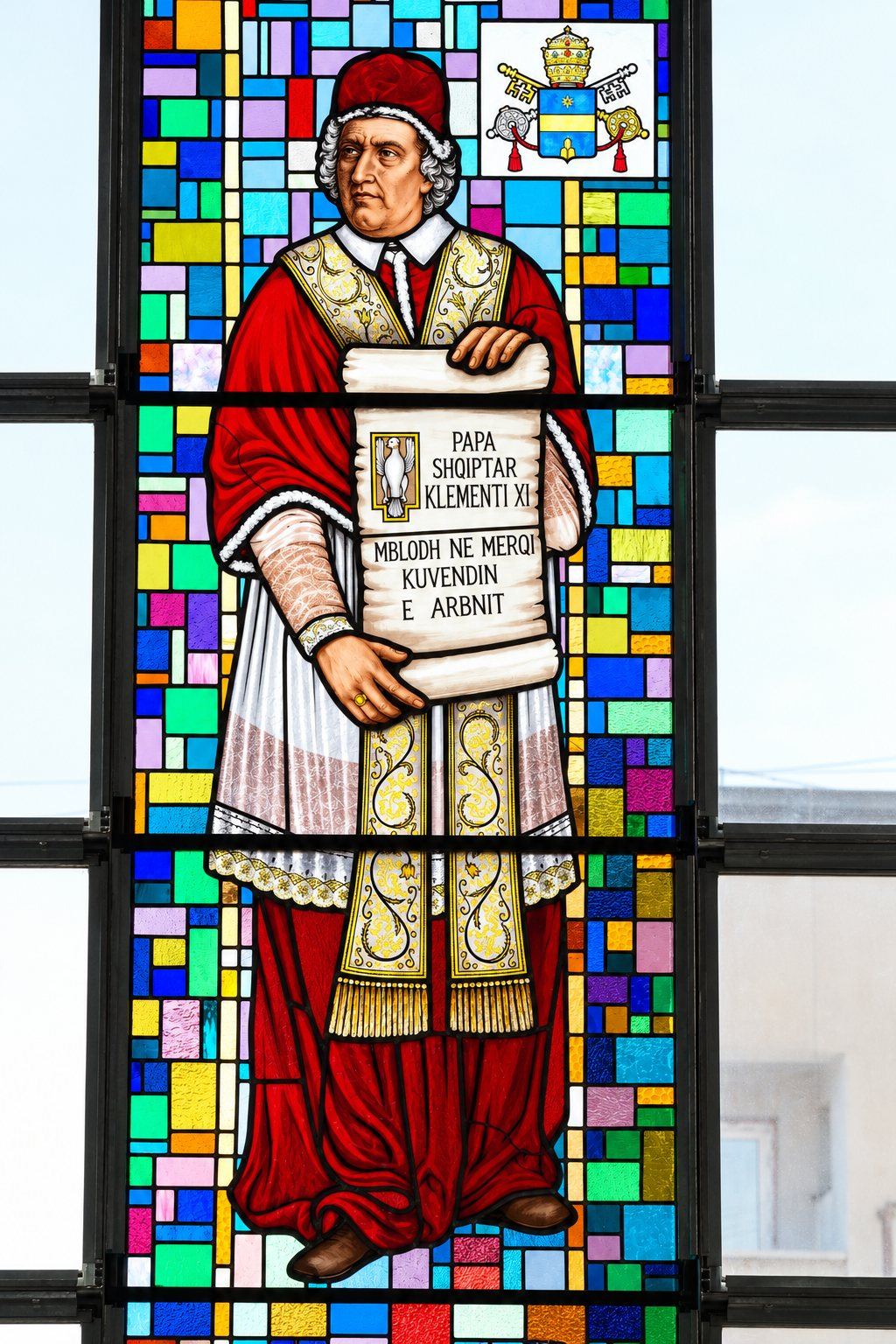 Pope Clement XI
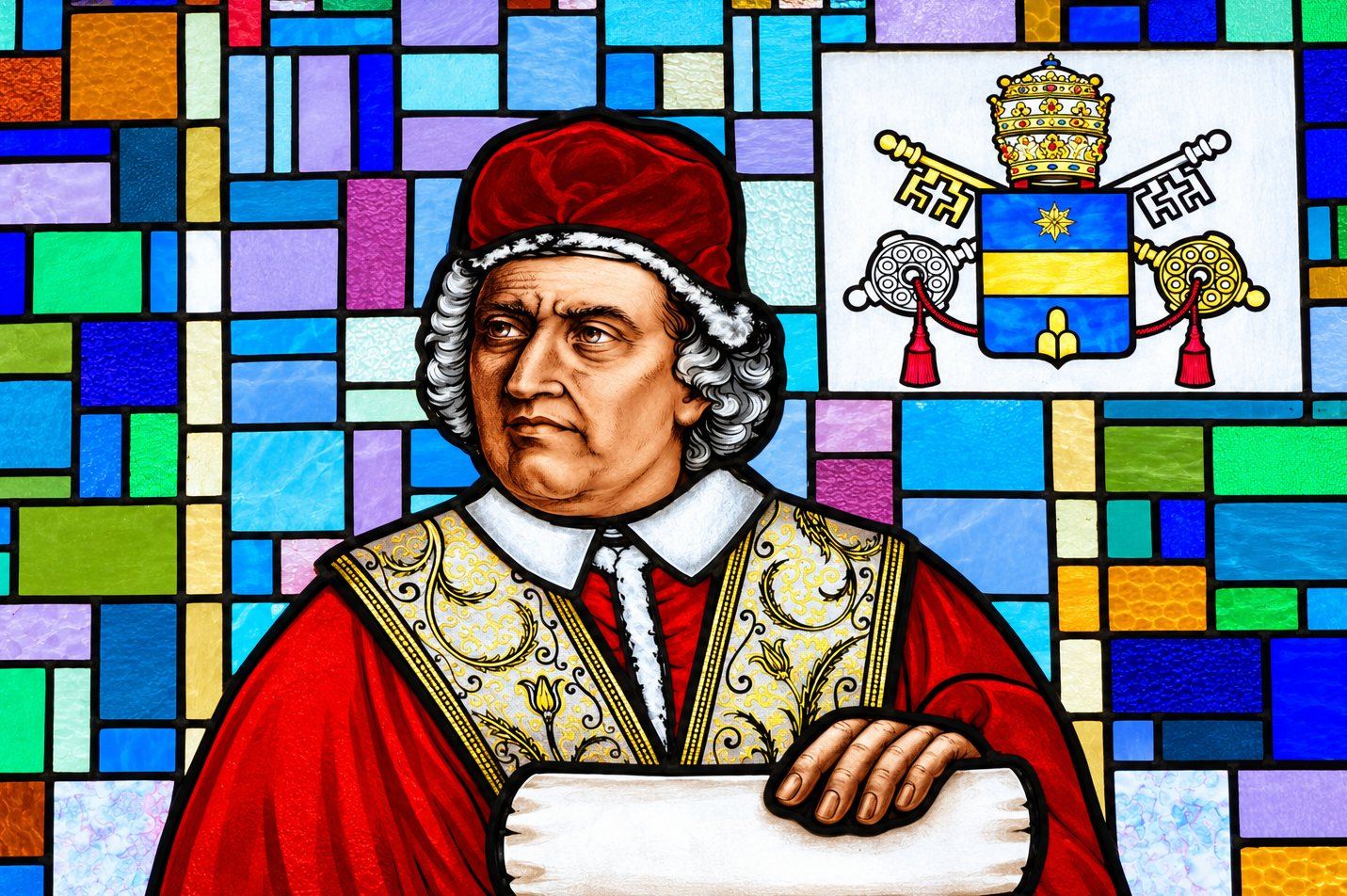 Pope Clement XI
The 40 martyrs
One of the most moving windows is a tree of 40 martyrs of the communist era: priests and faithful who gave their lives for their faith under the communist regime, their portraits rising on its branches from the roots, with blood flowing around them. In 2016 the Church beatified 38 Albanian martyrs of that persecution.
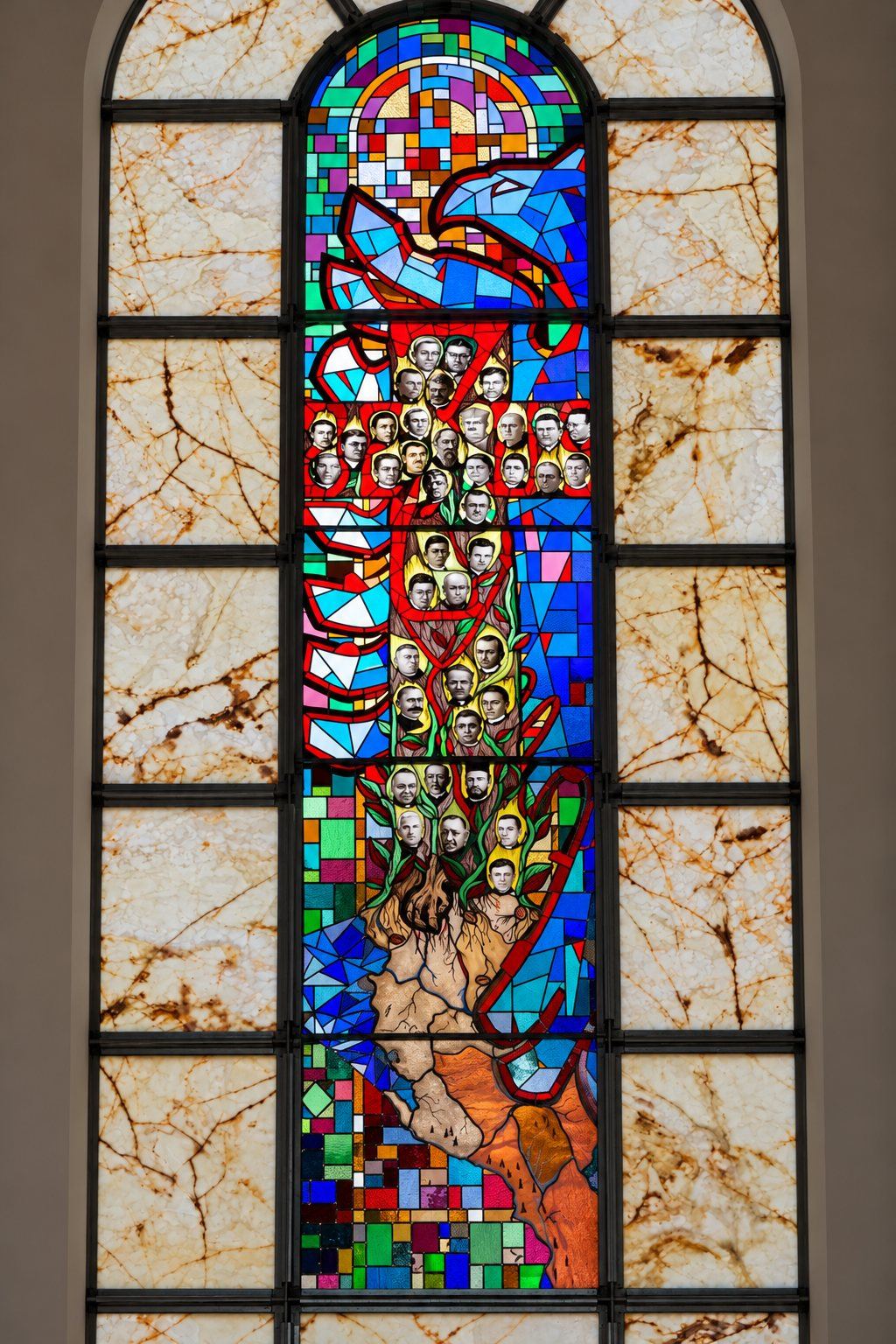 The 40 martyrs
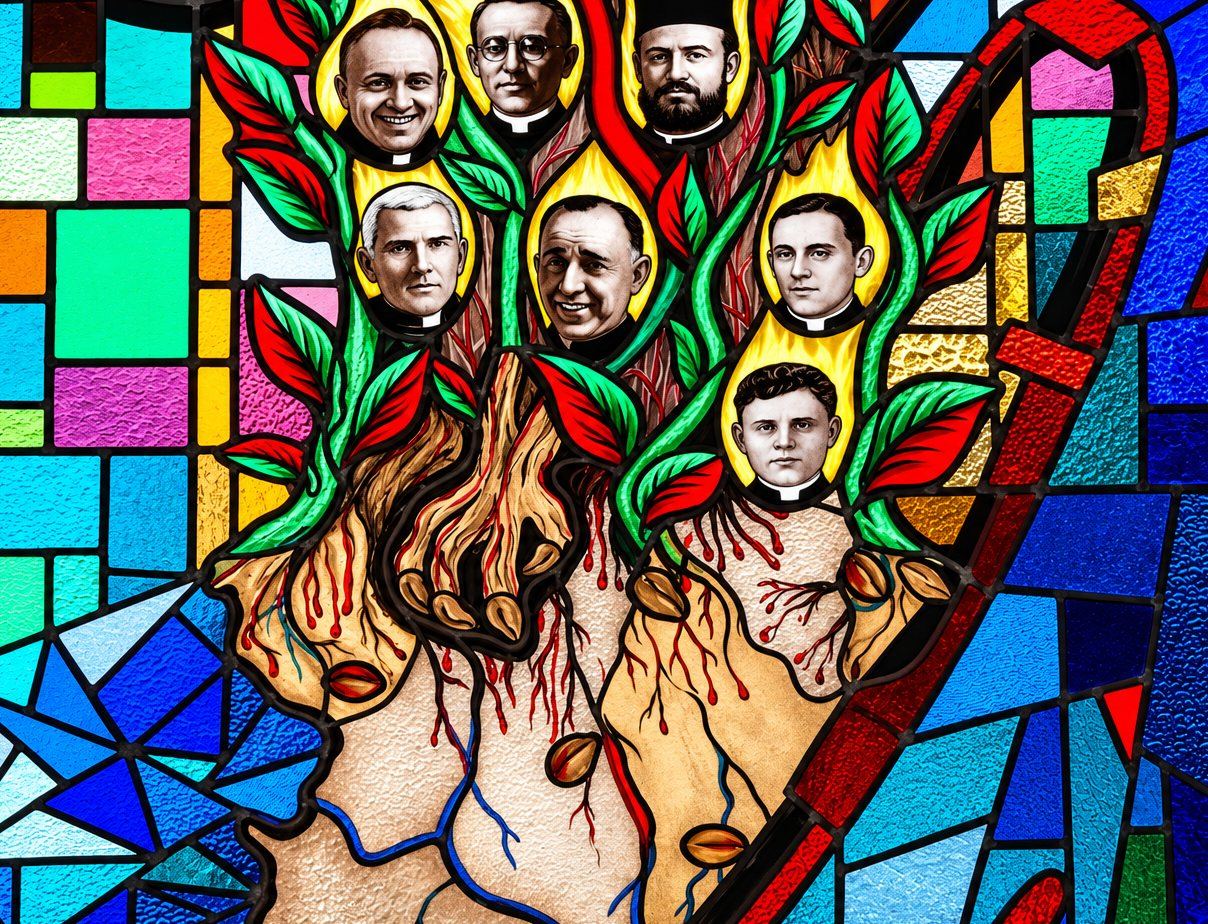 The roots
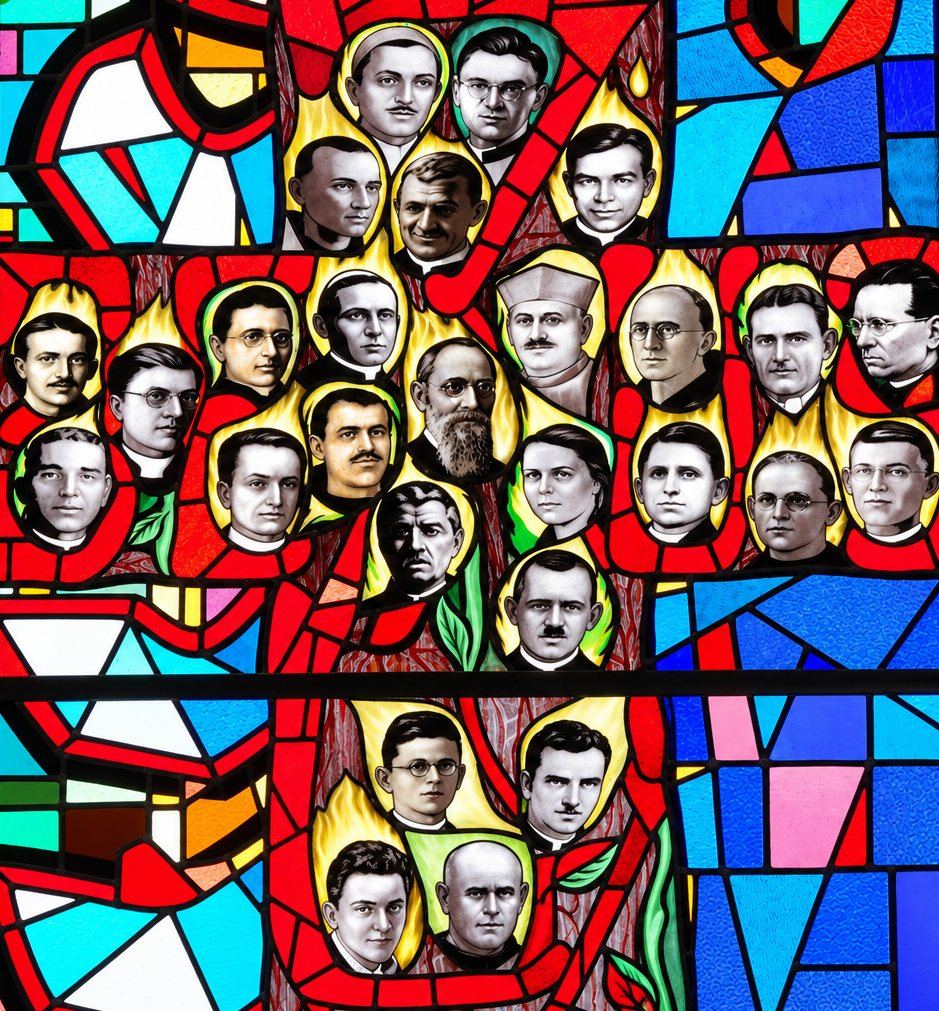 The blood of the martyrs
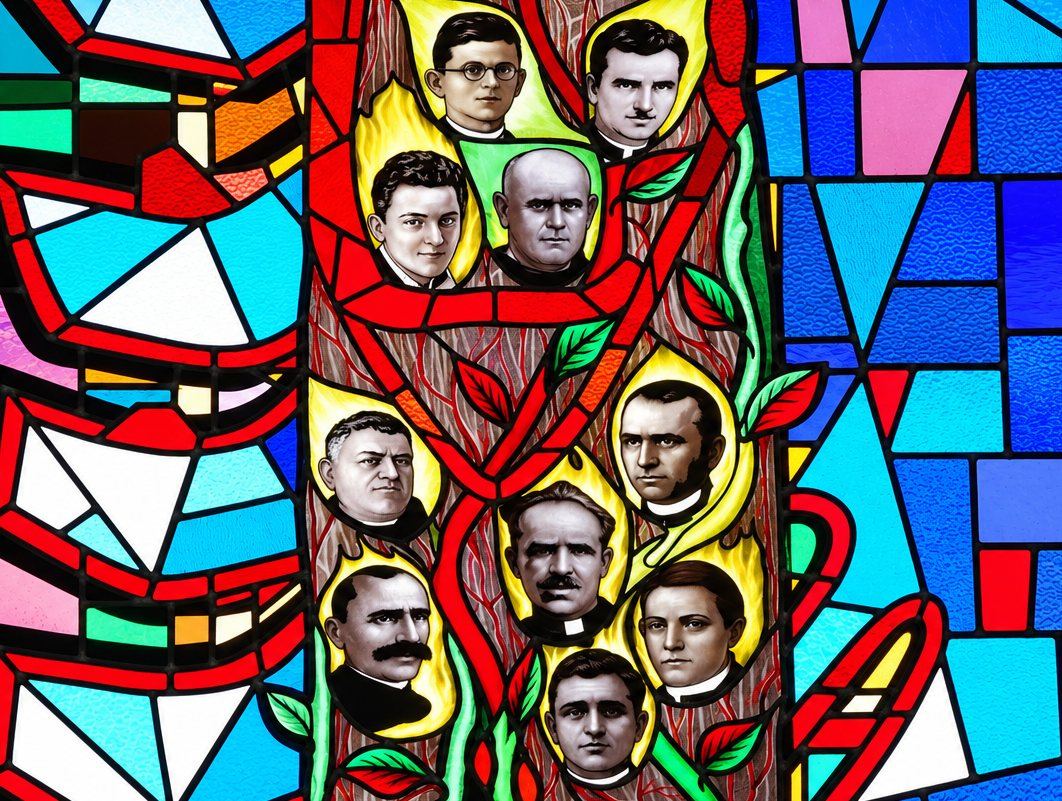 On the branches
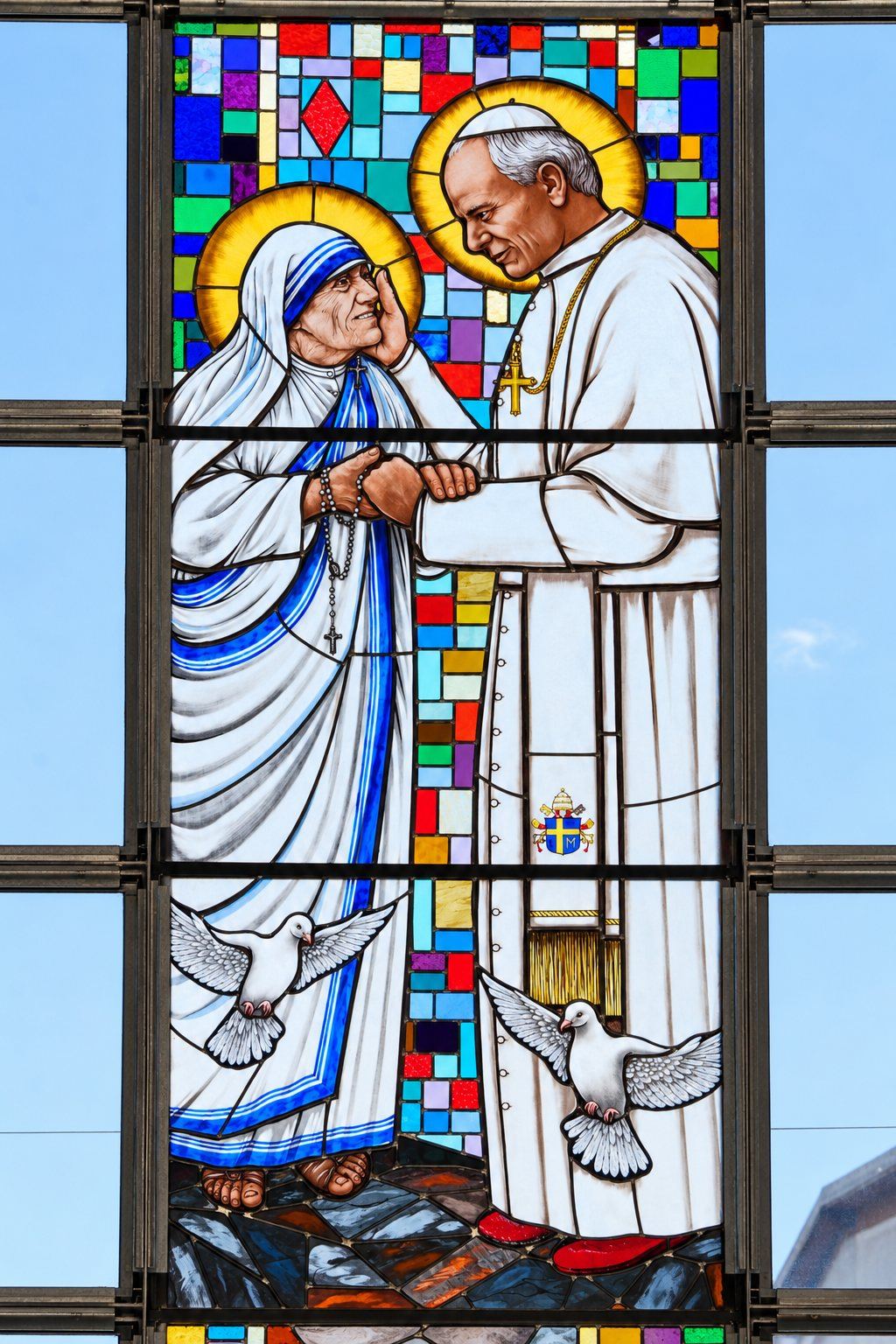
Mother Teresa and Pope John Paul II
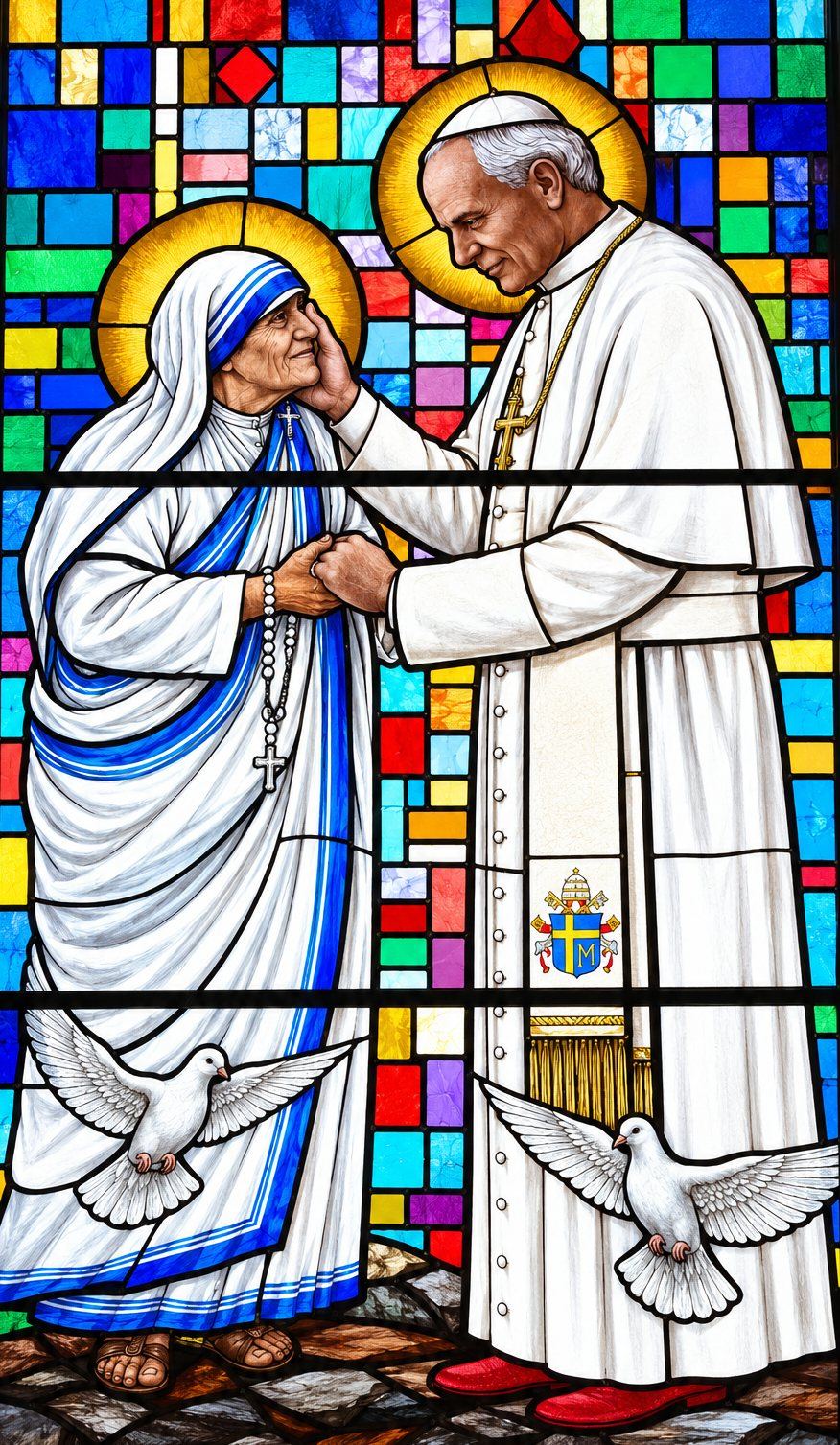
Mother Teresa, the saint of the cathedral, was of Albanian origin: she was born Anjezë Gonxhe Bojaxhiu in Skopje in 1910, to a Kosovar Albanian family. In the window she holds the hands of Pope John Paul II, with 2 white doves at their feet.
Pope Francis and Pope Benedict XVI
Our own time has its window too: Pope Francis and Pope Benedict XVI greeting each other.
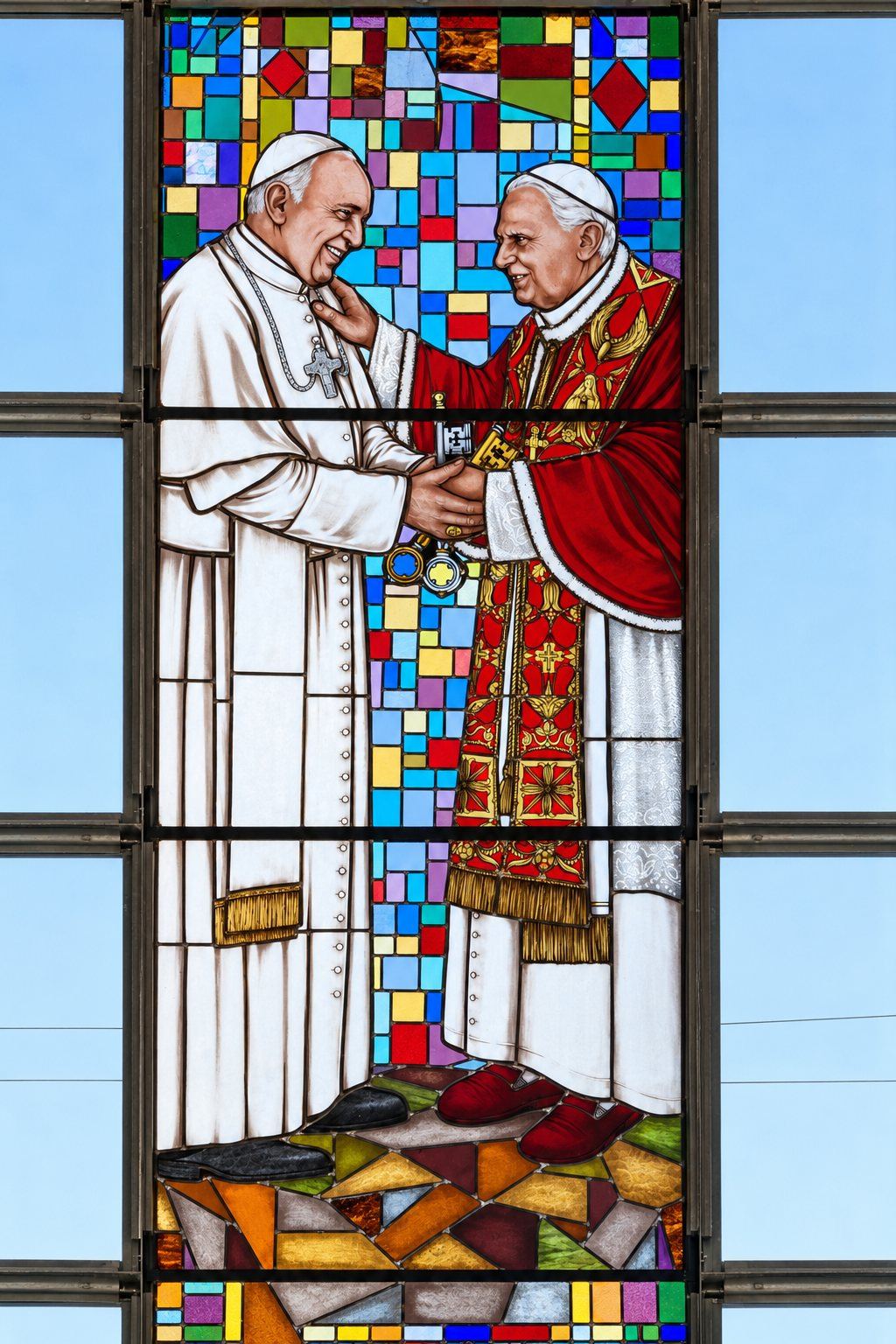 Pope Francis and Pope Benedict XVI
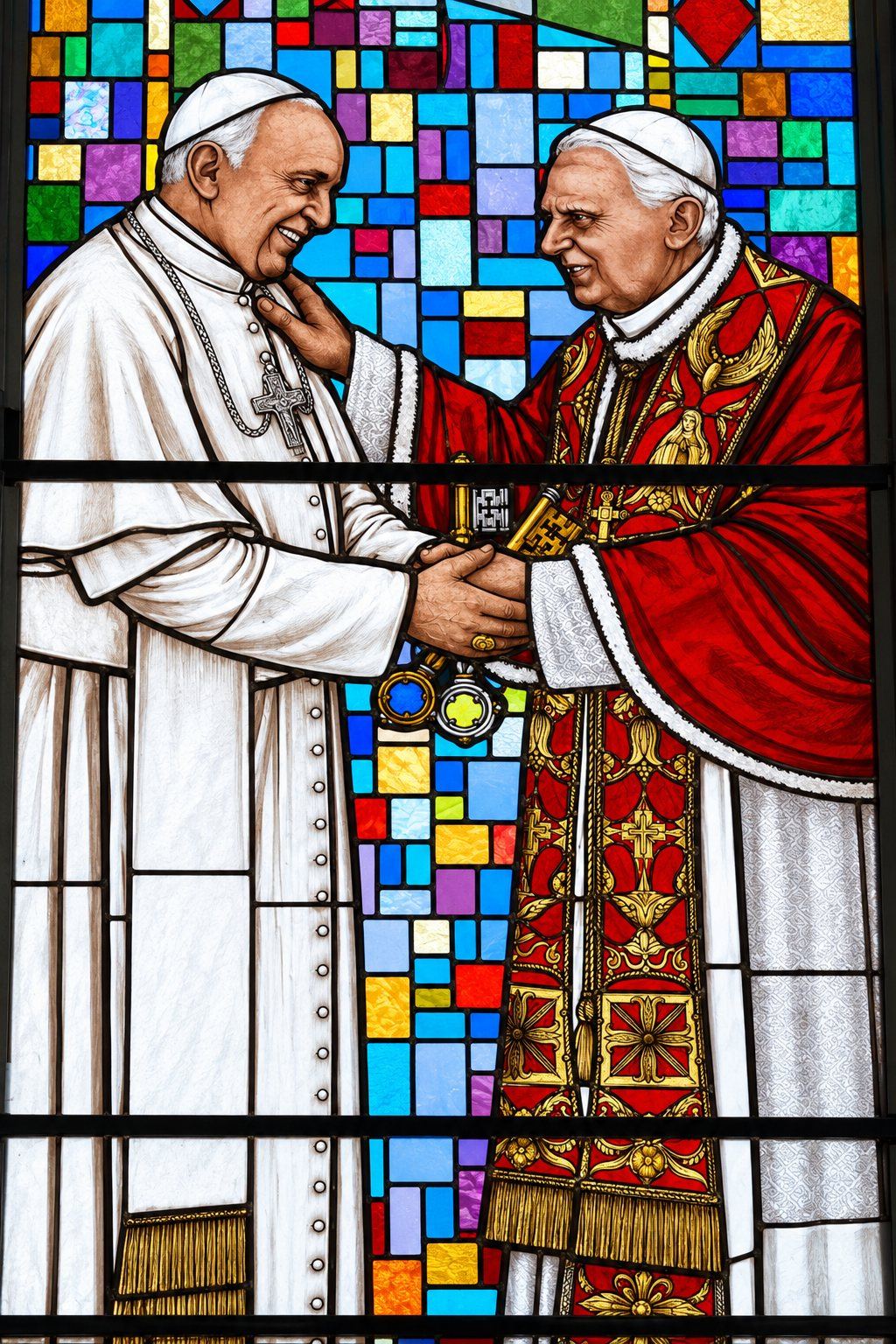 The greeting
The Holy Angels at the altar
The walk ends behind the altar, with the 2 Holy Angels, the first windows we made: one kneeling on the clouds in prayer, a palm at her feet, the other standing with a book, both in white and gold.
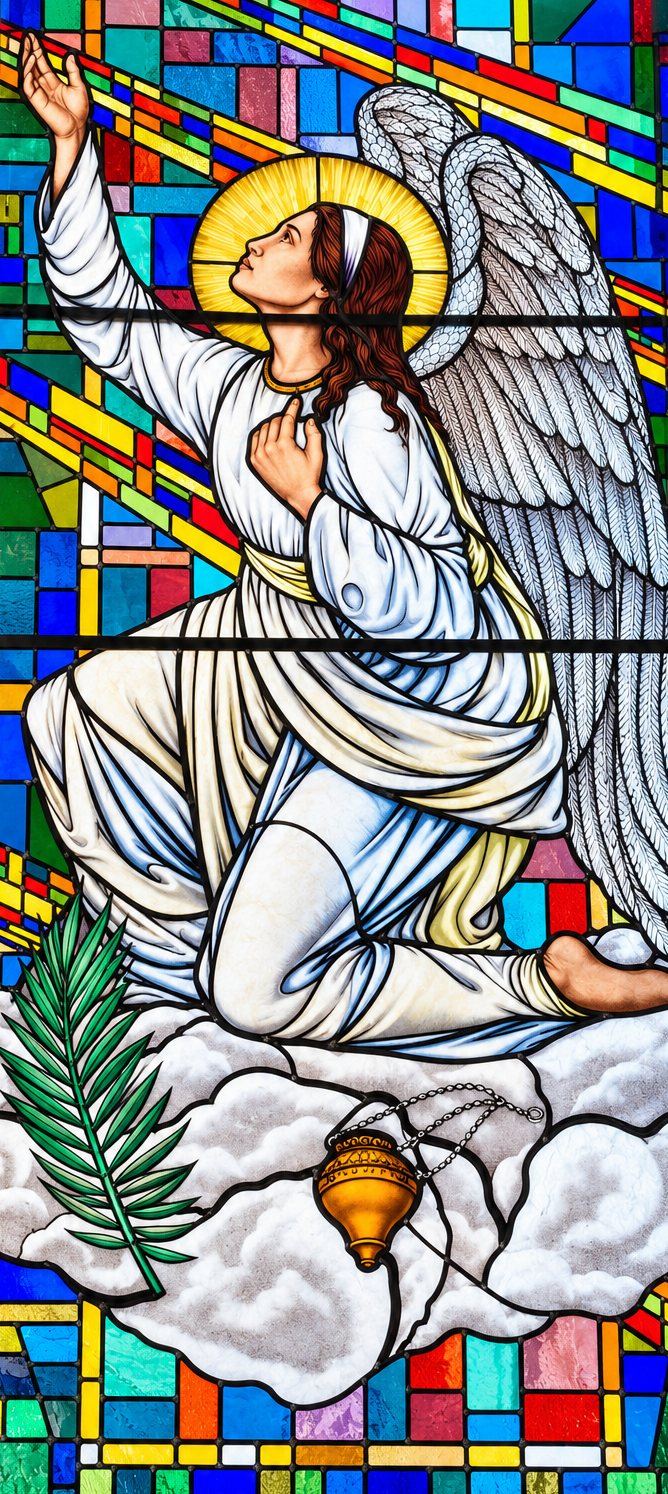 The kneeling angel
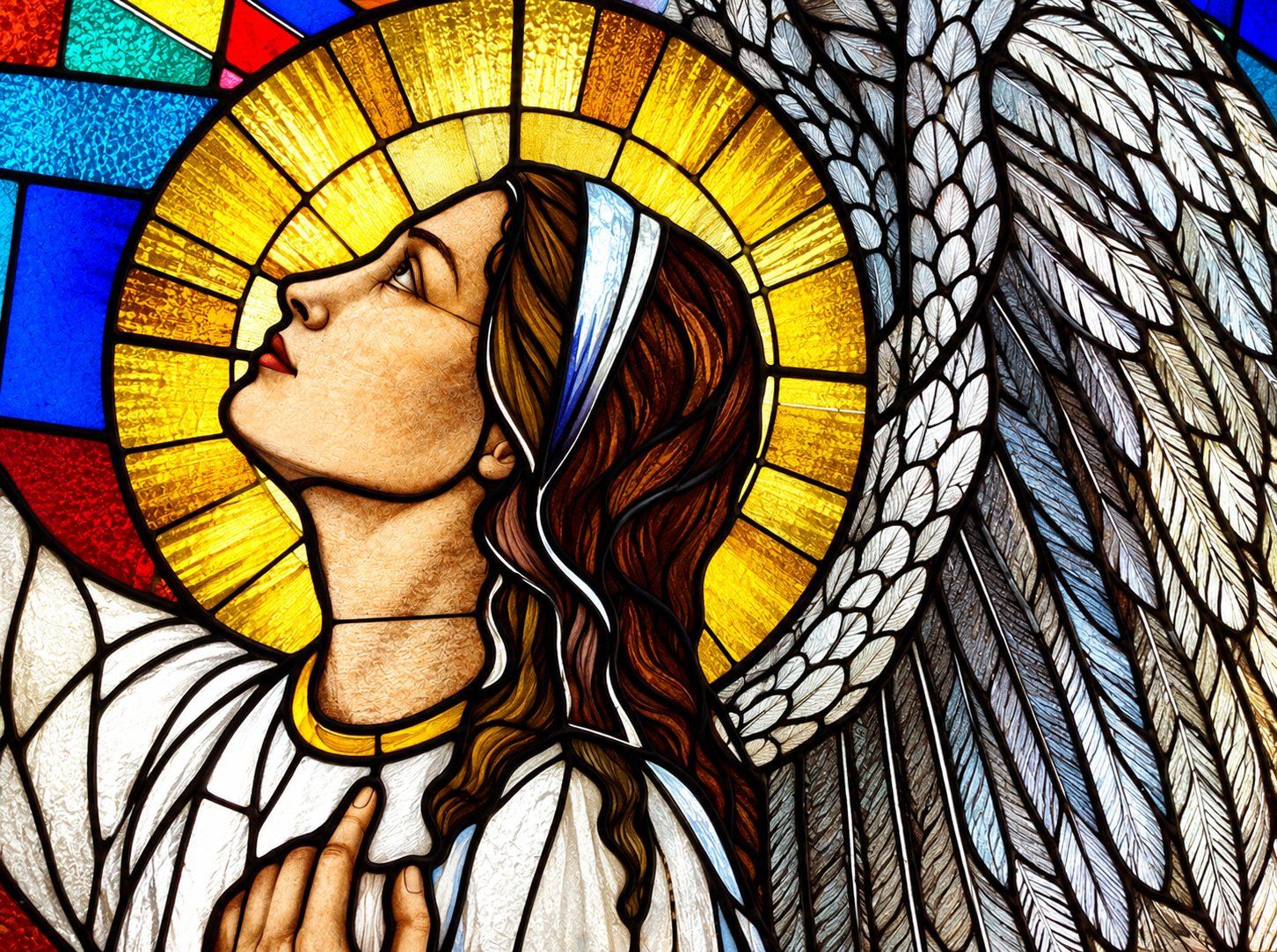 The face of the angel
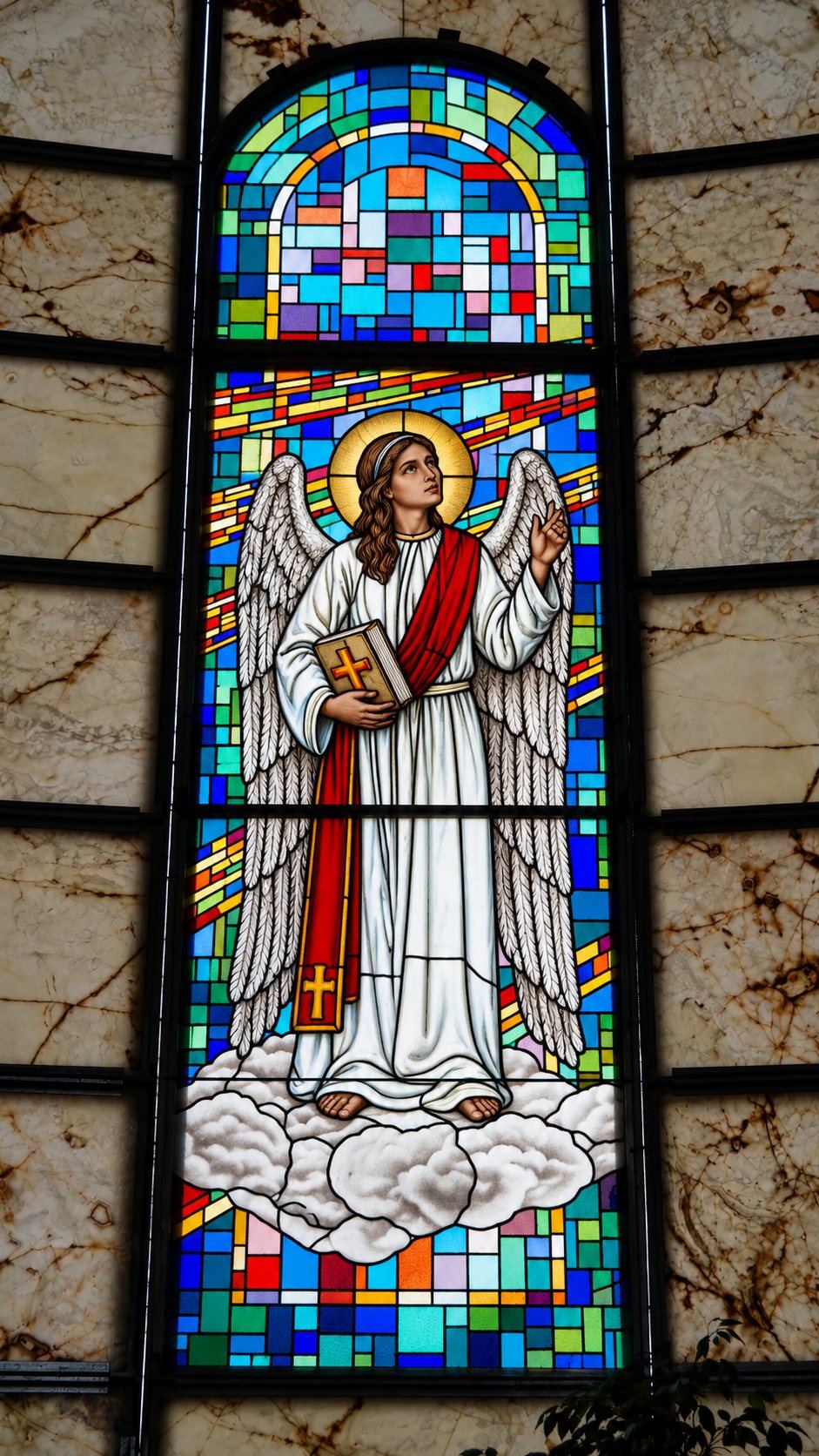 The standing angel
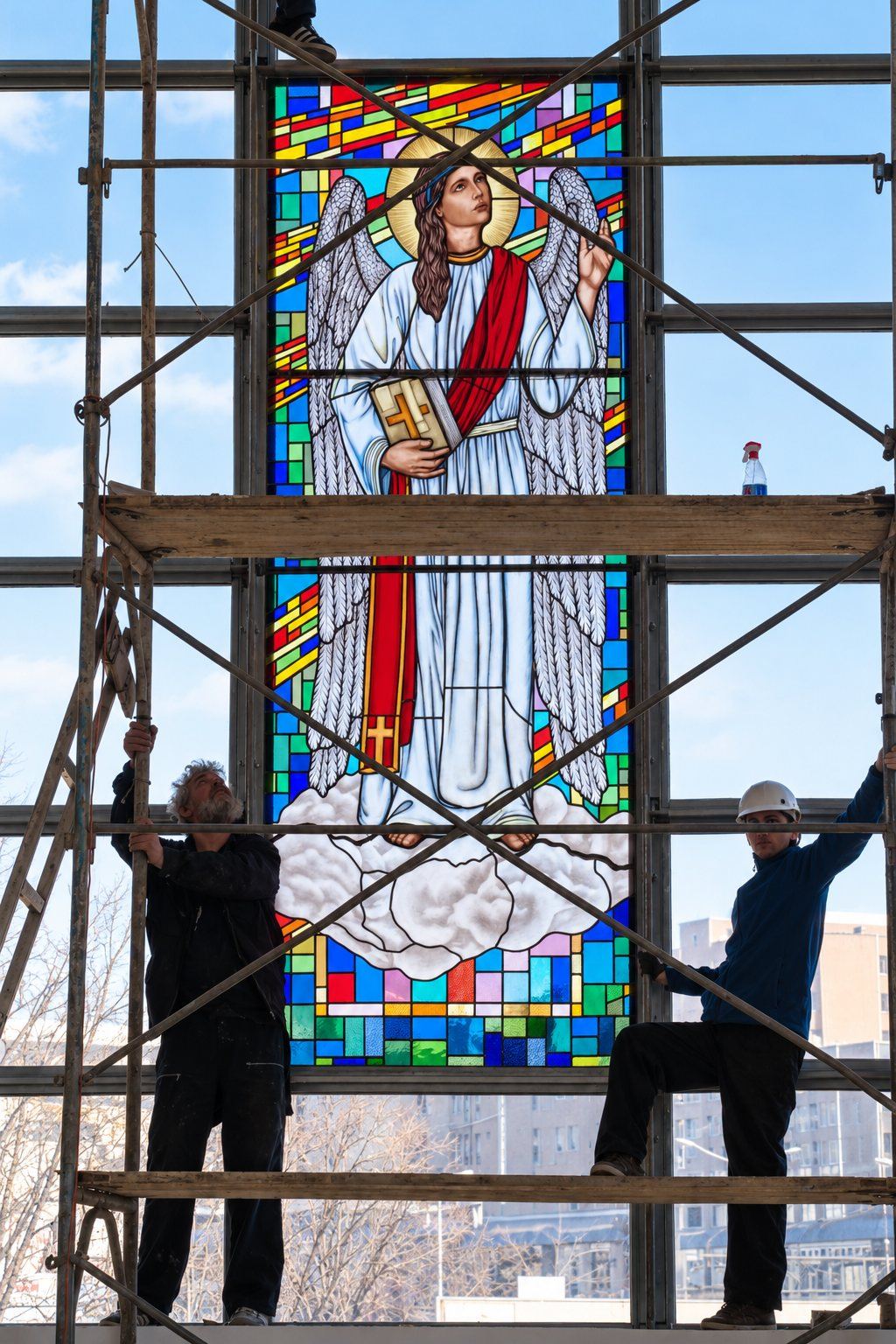 On the scaffold
Installation
Our crew installed the windows from scaffolding inside the cathedral, one window after another, on many visits from Sombor.
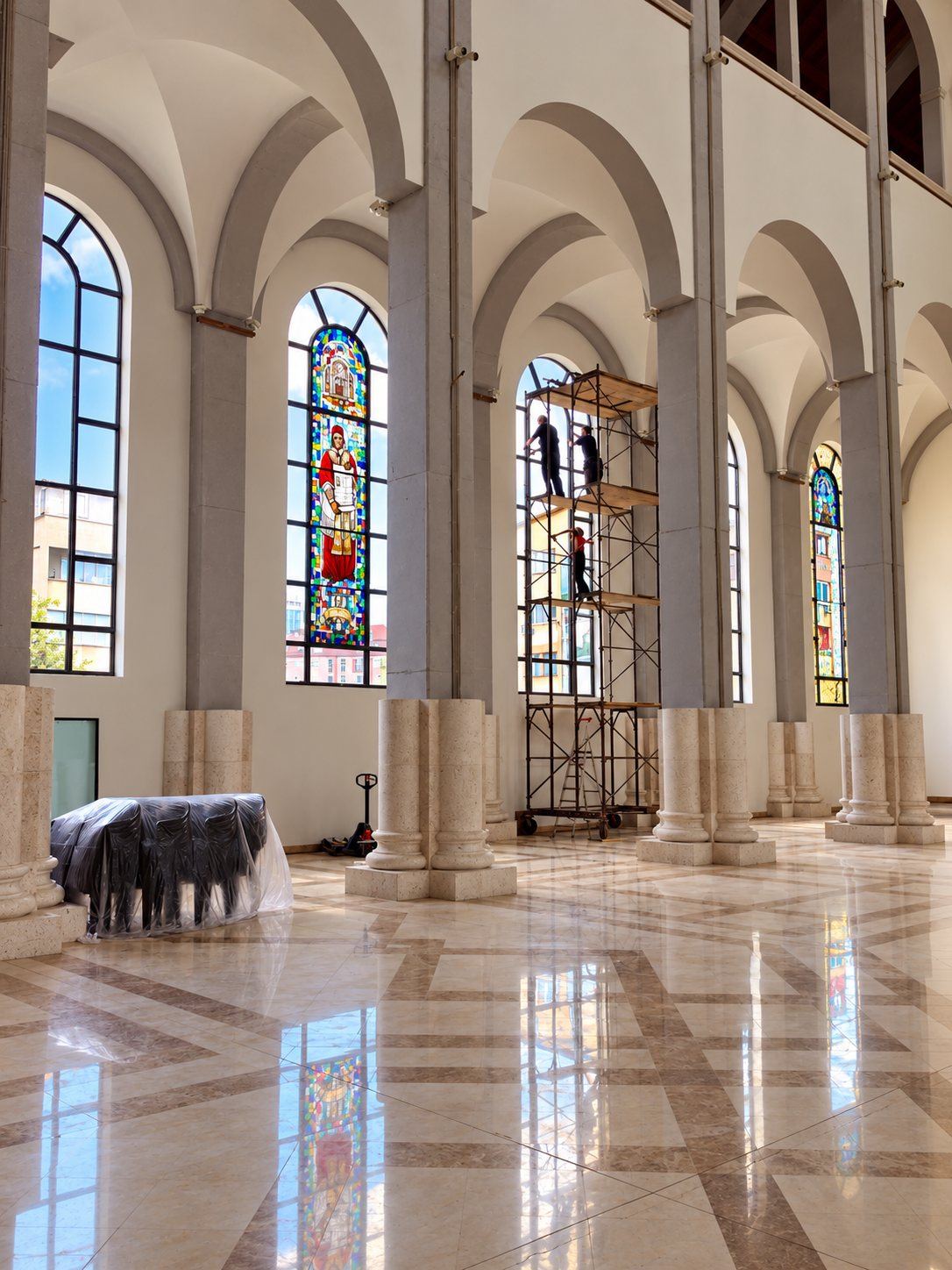
A Mass in Serbian
At the end of the project, Bishop Gjergji celebrated Sunday Mass, and we were there. To the big surprise of his parishioners, he served part of the Mass in the Serbian language, in our honor. Afterwards everyone came to congratulate us on the work.
This is a project that will stay with us for a lifetime. Our special thanks go to Bishop Dodë Gjergji, who trusted us with the art for the most important sacred building in Kosovo, to don Dominik Qerimi, and to everyone who welcomed us in Pristina and Gnjilane.
See more of our stained glass commissions and sacred art.
Cathedral: Cathedral of Saint Mother Teresa, Pristina, Kosovo
Client: Bishop Dodë Gjergji, Apostolic Administration of Prizren
Design and storyline: don Dominik Qerimi
Design and glass painting: Tatjana Armuš, Stefan Stojšić, Nemanja Mudrić
Fabrication: Tanja Lovrić, Boban Marjanović, Istvan "Pišta" Bala
Installation: Milan Stanisic Junior, Boban Marjanović, Istvan "Pišta" Bala, Ferenz Silaði
Work: 18 stained glass windows, about 1,300 sq ft
Studio: Stanisic Studio, Sombor, Republic of Serbia
Agreement: 26 April 2014